12axes-testTake the test
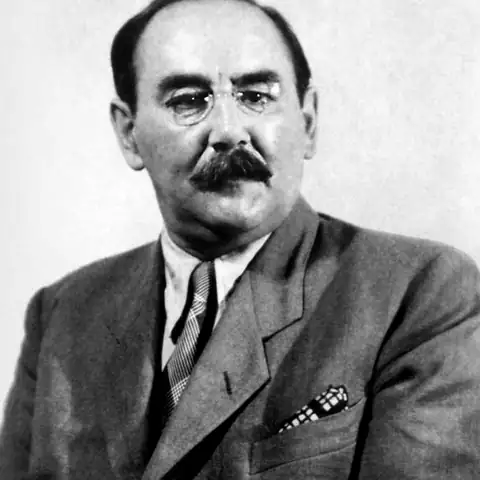
Imre Nagy
Historical figureHungary1896-1958

Imre Nagy

Prime Minister of Hungary (1953-1955 and 1956) · Minister of Agriculture (1945)

Hungarian communist who led a reformist New Course in 1953 and, as prime minister during the 1956 uprising, announced a multiparty system and neutrality before Soviet troops crushed it. He was executed in 1958.

Profile on 12 axes6 of 12 documented
ECONOMYSTATESOCIETYWORLDOwnershipMarketsWelfareAuthoritySecurityStructureMoralityReligionTechnologyCultureTradeForeign
Where they stood

Imre Nagy, axis by axis

  1. PublicPrivate

    He remained a communist and directed the 1945 land reform, but in 1953 let peasants leave the cooperatives. Moderate toward public ownership.

  2. PlannedFree

    His New Course gave peasants tax relief and easier credit and let them leave the cooperatives. A mild move toward markets within a planned system.

  3. SharedSelf-reliant
  4. DemocraticStrong leader

    In 1956 his government abolished the one-party system and stressed a neutral, multiparty social democracy. But he was a loyal party man for decades.

  5. LibertyOrder

    He ended deportations in 1953 and in 1956 abolished the ÁVH secret police.

  6. 06StructureNo clear record
    LocalCentral
  7. 07MoralityNo clear record
    ProgressiveTraditional
  8. 08ReligionNo clear record
    SecularReligious
  9. 09TechnologyNo clear record
    EmbraceCaution
  10. 10CultureNo clear record
    MulticulturalNational identity
  11. 11TradeNo clear record
    GlobalProtected
  12. CooperationStrength

    He declared neutrality, withdrew from the Warsaw Pact and appealed to the United Nations. A sovereignty move that leans to cooperation, not military strength.

6 axes have no clear record, so matching leaves them out.

Who was Imre Nagy?

Imre Nagy was born on 6 July 1896 in Kaposvár to a peasant family. Captured on the Russian front in the First World War, he joined the Bolsheviks in 1918 and lived in the Soviet Union from 1930. Back in Hungary at the end of 1944, he directed the 1945 land reform. After Stalin's death he became prime minister in 1953 but was removed in 1955 and expelled from the party. During the October 1956 uprising he returned as prime minister. Soviet forces crushed the revolt in early November, and he was executed in June 1958 after a secret trial.

Political views

  • Directed the 1945 land reform as agriculture minister, which made him very popular with peasants.Source: encyclopedia.com
  • As prime minister in 1953 he let peasants leave cooperatives, ended deportations, gave farmers tax relief and easier credit, and announced political liberalization.Source: encyclopedia.com
  • Considered giving Hungary neutral status on the Austrian pattern in 1955, after Rakosi had him discredited and removed from office.Source: newworldencyclopedia.org
  • On 27 October 1956 called the uprising a broad democratic mass movement and formed a government that included non-communists.Source: newworldencyclopedia.org
  • His government abolished the ÁVH and the one-party system, and editorials stressed a neutral, multiparty social democracy.Source: newworldencyclopedia.org
  • On 1 November 1956 the cabinet declared neutrality, withdrew from the Warsaw Pact and appealed to UN Secretary-General Dag Hammarskjöld.Source: newworldencyclopedia.org
  • Broadcast at 5:20 on 4 November that Soviet forces were attacking Budapest and that the government remained at its post.Source: newworldencyclopedia.org

Legacy

Admirers in Hungary see Nagy as a martyr of the 1956 revolution who chose to side with the people rather than repress them, and he was reburied with full honors after the communist system fell. His land reform and New Course also won him lasting respect among peasants. Critics note he was a loyal party reformer for decades and had lived in the Soviet Union since 1930, and one reference work says he had only modest political skills. He was lured out of the Yugoslav embassy, taken to Romania, secretly tried and executed in June 1958 with Pal Maleter and Miklos Gimes, and the bodies were placed in unmarked graves.

How close are you to Imre Nagy?

Take the 12 Axes test and see which historical figure is your political twin, axis by axis.

Take the test

Imre Nagy: questions

Was Imre Nagy a communist?

Yes. He joined the Bolsheviks in 1918 and stayed a party man for decades. His reformist New Course and his 1956 multiparty announcement set him against the party's hardliners.

What did Imre Nagy do in 1956?

As prime minister he abolished the one-party system, declared neutrality and withdrew from the Warsaw Pact on 1 November. Soviet forces attacked Budapest on 4 November.

How did Imre Nagy die?

After the Soviet invasion he left the Yugoslav embassy on 22 November 1956 and was captured. He was tried in secret, sentenced to death and executed in June 1958.

Sources