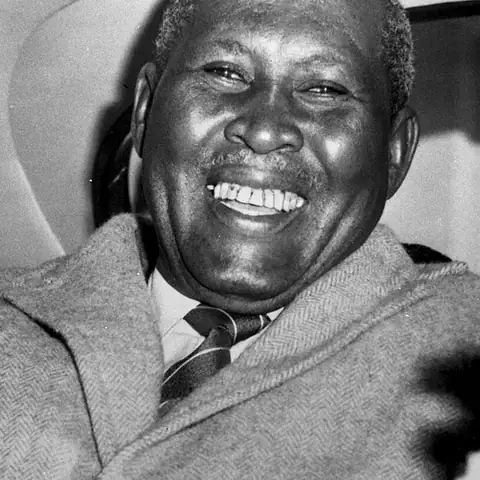
Who was Albert Luthuli?
Albert Luthuli was born in 1898 and raised largely at Groutville in Natal. He trained as a teacher, became a lay Methodist preacher, and was made chief of Groutville in 1935. He joined the Natives' Representative Council in 1948 and became the ANC's Natal president in 1951. Dismissed as chief in November 1952, he was elected ANC President-General that December and held the post until his death. The state banned and confined him from 1953, and he was arrested in the 1956 treason trial. He received the Nobel Peace Prize for 1960, and he died in July 1967.
Political views
- His 1952 statement 'The Road to Freedom is via the Cross' set out his commitment to nonviolent resistance.Source: sahistory.org.za
- He believed apartheid harmed everyone who took part in it and hoped whites would eventually accept a shared society.Source: sahistory.org.za
- He supported the multiracial Congress Alliance and defended the right of people with different ideologies to take part in the struggle.Source: sahistory.org.za
- He personally preferred a socialism like the British Labour Party's.Source: sahistory.org.za
- His stance on the shift to armed struggle is disputed. A source calls him ambivalent, and another argues he did not support violence in December 1961.Source: sahistory.org.za
- Authorities banned him in 1953, renewed the ban, and in 1959 confined him to the Lower Tugela district for five years. He was arrested in December 1956 in the treason trial.Source: sahistory.org.za
- He was a lay Methodist preacher and attended an international missionary conference in India in 1938.Source: sahistory.org.za
Legacy
Luthuli is honored as Africa's first Nobel Peace laureate and as the moral voice of the ANC in the years when it was banned from open action. Admirers credit him with holding together a multiracial alliance and with insisting on nonviolence in the face of state repression, including bans and the treason trial. Critics ask whether strict nonviolence could succeed against a state that banned peaceful protest, and his own stance on armed struggle remains disputed. He died on 21 July 1967. The original inquest blamed a train accident, but a recent court ruling overturned that finding.