12axes-testTake the test
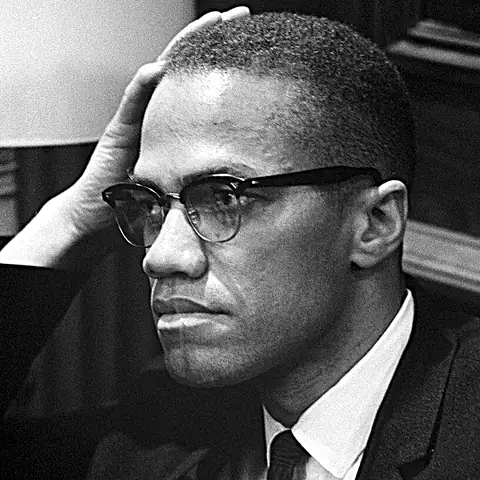
Malcolm X
Historical figureUnited States1925-1965

Malcolm X

Minister and national spokesman of the Nation of Islam · Founder of Muslim Mosque, Inc. and the Organization of Afro-American Unity

Black nationalist and Nation of Islam minister who rejected nonviolence and integration, left the Nation in 1964 and began describing racism as a human rights issue.

Profile on 12 axes7 of 12 documented
ECONOMYSTATESOCIETYWORLDOwnershipMarketsWelfareAuthoritySecurityStructureMoralityReligionTechnologyCultureTradeForeign
Where they stood

Malcolm X, axis by axis

  1. PublicPrivate

    Near the end of his life he criticised capitalism and said socialism would have his support if it served Black people. His widow denied he was a socialist. Rated mildly toward public ownership.

  2. 02MarketsNo clear record
    PlannedFree
  3. SharedSelf-reliant

    Leans mildly toward redistribution, since he said the government owed reparations for unpaid slave labour. His focus on Black self-reliance pulls the other way.

  4. DemocraticStrong leader
  5. LibertyOrder

    He turned down nonviolence and accepted armed self-defence when the authorities did not protect Black people. This points away from state order.

  6. 06StructureNo clear record
    LocalCentral
  7. ProgressiveTraditional
  8. SecularReligious
  9. 09TechnologyNo clear record
    EmbraceCaution
  10. 10CultureNo clear record
    MulticulturalNational identity

    He opposed integration and assimilation while promoting a distinct Black and Pan-African identity. Neither end of this axis fits, so it is blank.

  11. 11TradeNo clear record
    GlobalProtected
  12. CooperationStrength

    Sought to put the United States on trial at the UN and the World Court, and made contact with newly independent African countries.

5 axes have no clear record, so matching leaves them out.

Who was Malcolm X?

Malcolm Little, later known as Malcolm X, was born in Omaha, Nebraska, in 1925. Part of his youth was spent in foster homes. A burglary conviction sent him to prison in 1946, and he converted to the Nation of Islam there. He was freed in 1952 and rose to be a minister serving Elijah Muhammad. By the end of the 1950s he was the group's most famous voice. He left it in March 1964, made the pilgrimage to Mecca and became a Sunni Muslim. Two new groups followed, Muslim Mosque, Inc. and the Organization of Afro-American Unity. On February 21, 1965, gunmen killed him as he spoke in Harlem's Audubon Ballroom.

Political views

  • He called for freedom, justice and equality 'by any means necessary'. If the government failed to keep Black people safe, he said, they had the right to protect themselves.Source: en.wikipedia.org
  • As the best-known spokesman for Black nationalism, he urged Black self-reliance and separation, and he spoke against integration.Source: kinginstitute.stanford.edu
  • He turned down nonviolence and openly attacked Martin Luther King Jr.'s nonviolent, multiracial approach.Source: kinginstitute.stanford.edu
  • His 1964 speech The Ballot or the Bullet urged Black voters to use the ballot. It also warned that armed struggle could come if equality was still withheld.Source: en.wikipedia.org
  • He wanted civil rights recast as human rights, so that the United States could be accused before the United Nations.Source: en.wikipedia.org
  • His Organization of Afro-American Unity supported Pan-Africanism and linked the Black struggle in America with the end of colonial rule.Source: constitutioncenter.org
  • After going to Mecca in 1964 he wrote that his thinking on race had been rearranged and that he had dropped some earlier views.Source: en.wikipedia.org

Legacy

To admirers, Malcolm X was a brave opponent of racism. They credit his message of dignity, self-defence and pride with inspiring Black Power, the Black Arts movement and the phrase 'Black is beautiful'. The autobiography he wrote with Alex Haley came out after his death and is still widely read. Critics at the time, the NAACP among them, called the Nation of Islam extremist. They disliked its claim that white people were devils, his scorn for the 1963 March on Washington, and his remark that Kennedy's killing was 'chickens coming home to roost'. Three Nation of Islam men were found guilty of the murder in 1966. Two of those verdicts were set aside in 2021, when it came out that evidence had been withheld.

In their own words

“We want freedom now, but we're not going to get it saying 'We Shall Overcome.' We've got to fight to overcome.”
Remarks at a Congress of Racial Equality symposium, published in Malcolm X Speaks

How close are you to Malcolm X?

Take the 12 Axes test and see which historical figure is your political twin, axis by axis.

Take the test

Malcolm X: questions

Why did Malcolm X leave the Nation of Islam?

Disillusion with its leaders set in, in part over reports about Elijah Muhammad's private conduct. The Nation also suspended him after his Kennedy remark. In March 1964 he declared that he was leaving.

Did Malcolm X change his mind before he died?

Yes. In 1964 he travelled to Mecca, took up Sunni Islam and wrote that some of his old ideas about race needed rethinking. He still argued for Black self-determination and for human rights.

What was The Ballot or the Bullet about?

It was a speech from 1964 telling Black people to use the vote wisely. Malcolm X warned that continued denial of equality might push some to pick up weapons.

Sources