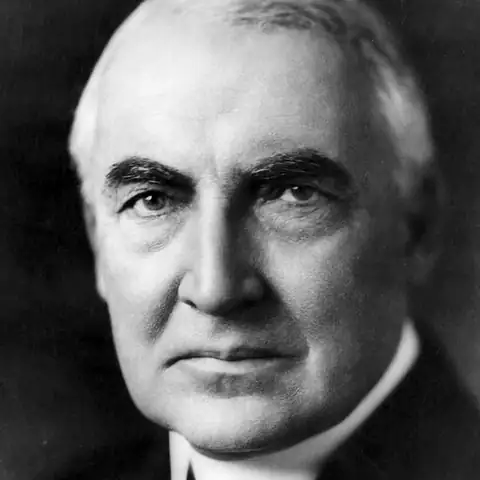
Who was Warren G. Harding?
Before politics, Warren G. Harding ran a newspaper in Marion, Ohio. He went on to be Ohio's lieutenant governor and a US senator, and in 1920 he emerged from a deadlocked Republican convention as the compromise pick. Speaking from his front porch, he promised 'normalcy' after the First World War and the League of Nations fight, and won by a landslide. His cabinet included able men such as Charles Evans Hughes, Andrew Mellon and Herbert Hoover, but also friends from politics, and several of those turned out to be corrupt. He died suddenly in San Francisco in August 1923, before the scale of the scandals was clear.
Political views
- Backed Treasury Secretary Andrew Mellon's plan for large tax cuts that helped the rich and corporations most.Source: millercenter.org
- Signed a 1921 law that for the first time had the president send Congress one federal budget.Source: millercenter.org
- Supported the Fordney-McCumber Tariff, which undid the lower rates of the Wilson years.Source: millercenter.org
- Backed the 1921 quota law that capped each country's yearly immigration by national origin.Source: millercenter.org
- Freed several people jailed under wartime laws once their cases were reviewed one by one, among them Socialist leader Eugene Debs.Source: millercenter.org
- Gave a 1921 speech in Birmingham, Alabama, to a segregated crowd, urging political and economic equality for Black Americans.Source: en.wikipedia.org
- Hosted a 1921-1922 conference in Washington that put limits on the fleets of the great powers.Source: millercenter.org
Legacy
For decades historians placed Harding at or close to the bottom of presidential rankings, chiefly because of corrupt appointees. Interior Secretary Albert Fall went to prison for taking bribes over oil leases at Teapot Dome, and the head of the Veterans Bureau cheated veterans' hospitals. Critics add that he led weakly and that his tax and tariff choices favoured the rich. Some historians now judge him more kindly. They credit the budget system, the naval arms treaties, the release of wartime prisoners and his open words on race. His support for national-origin immigration quotas is widely condemned today.