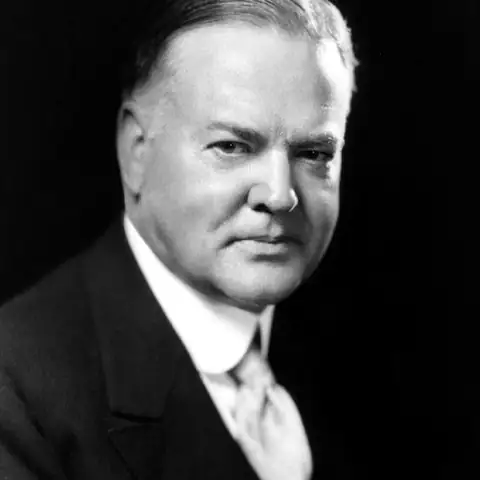
Who was Herbert Hoover?
Herbert Hoover was born in Iowa in 1874 and lost both parents young. He studied geology at Stanford and made a fortune as a mining engineer. In the First World War he ran food relief for Belgium, and he later headed the aid effort across Europe. He served as Secretary of Commerce for Presidents Harding and Coolidge, then won the White House in 1928. The stock market crashed in 1929 and the Depression followed. Hoover tried public works, farm support and emergency loans, but he resisted giving federal money straight to people. Franklin Roosevelt beat him heavily in 1932. Later he chaired commissions on government reorganization for Presidents Truman and Eisenhower.
Political views
- Wrote about the importance of the individual in American life in his 1922 book American Individualism.Source: millercenter.org
- Set up the Federal Farm Board to encourage farmers' cooperatives rather than direct subsidies.Source: millercenter.org
- Backed the Reconstruction Finance Corporation, a government body that lent money to banks and businesses in the Depression.Source: millercenter.org
- Gave way only a little on direct aid. A 1932 law paid for public works and sent relief funds to state governments.Source: millercenter.org
- Signed the Smoot-Hawley Tariff in 1930, which raised duties on farm goods and manufactured goods alike.Source: millercenter.org
- Asked in 1931 for a one-year pause in payments on war debts between governments.Source: millercenter.org
- Said the United States would interfere less in Latin America, and worked for naval disarmament.Source: millercenter.org
Legacy
For decades Hoover was blamed for a slow and weak reaction to the Depression, a picture fixed by the shantytowns called Hoovervilles. Many historians now say he did more than that image suggests. His public works, emergency lending and farm programs pointed ahead to parts of the New Deal. Critics on the right say his tariff and his interventions made the slump worse, and most economists think Smoot-Hawley did little good. The violent clearing of the Bonus Army in 1932 and the Mexican Repatriation also hurt his name. Admirers stress his humanitarian work in Europe after the First World War, which helped feed millions.