12axes-testTake the test
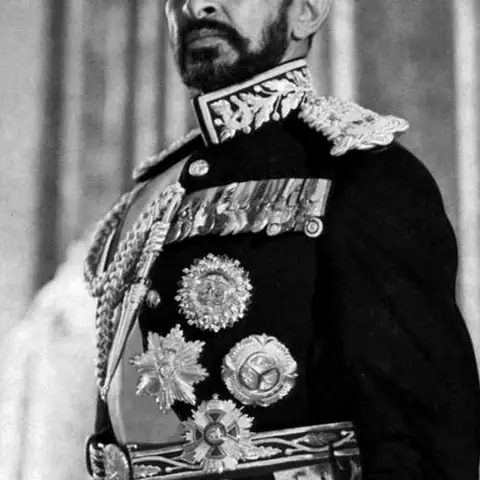
Haile Selassie
Historical figureET1892-1975

Haile Selassie

Emperor of Ethiopia (1930-1974) · Central figure of the Rastafari faith

Last emperor of Ethiopia, who modernized schooling and spoke for his country before the League of Nations but ruled as a near-absolute, feudal monarch until a military committee deposed him in 1974.

Profile on 12 axes8 of 12 documented
ECONOMYSTATESOCIETYWORLDOwnershipMarketsWelfareAuthoritySecurityStructureMoralityReligionTechnologyCultureTradeForeign
Where they stood

Haile Selassie, axis by axis

  1. 01OwnershipNo clear record
    PublicPrivate
  2. 02MarketsNo clear record
    PlannedFree
  3. 03WelfareNo clear record
    SharedSelf-reliant
  4. DemocraticStrong leader

    He ruled for nearly 45 years, kept the upper house appointed, banned parties and moved officials around so no rival could build a base.

  5. LibertyOrder

    A US diplomat described several overlapping intelligence services, and critics point to executions of rivals. This is a judgment call.

  6. LocalCentral

    A US official described him as delegating nothing and keeping power concentrated, and he weakened the provinces after 1941 according to one critic.

  7. ProgressiveTraditional

    Judged from a hereditary monarchy tied to the Orthodox church. No page read states his views directly.

  8. SecularReligious

    His rule rested on a claim of descent from the Solomonic line, drawn from the Kebra Nagast, and Rastafari later made him divine. The score is a judgment call.

  9. EmbraceCaution

    He expanded modern schooling and sent students abroad, so he sits on the embrace side.

  10. MulticulturalNational identity

    This is a contested call. The pages read give little on his language and ethnic policy, and the score rests on his centralized, Amhara-led monarchy.

  11. 11TradeNo clear record
    GlobalProtected
  12. CooperationStrength

    He appealed to the League of Nations in 1936 and aligned with the West. A critic calls him a loyal Western client, so the score is close to the middle.

4 axes have no clear record, so matching leaves them out.

Who was Haile Selassie?

Haile Selassie became emperor of Ethiopia on 2 November 1930 and ruled for nearly 45 years. He claimed descent from the Solomonic dynasty. After Italy invaded in 1935 he went into exile, and he returned to his throne after Italy's defeat in 1941. He expanded modern education and presided over a constitution that created a parliament, but he kept real power in his own hands. In 1974 a committee of junior officers known as the Derg gradually took control, and he was removed from the palace and held under house arrest. He died in 1975. Rastafari revere him as divine.

Political views

  • His rule drew on the claim that the imperial line descended from the Solomonic dynasty, as set out in the Kebra Nagast.Source: blogs.lse.ac.uk
  • He kept power concentrated by reshuffling ministers, governors and generals, and he ran several intelligence systems that watched one another.Source: adst.org
  • The upper house of parliament was appointed by the emperor, political parties were banned, and he controlled which legislation could pass.Source: adst.org
  • A constitution drafted with US legal help created a two-chamber parliament and a cabinet, but a former US diplomat said he delegated almost nothing.Source: adst.org
  • He modernized education and made English the language of future schooling, and students who studied abroad came home wanting change.Source: adst.org
  • In 1961 the Eritrean parliament voted to abolish the federation with Ethiopia, and an insurgency began a few months later.Source: adst.org
  • In 1948 he granted land at Shashemane in the Rift Valley to Rastafarians. One critical analysis says slavery was not ended in Ethiopia until 1942.Source: blogs.lse.ac.uk
  • The same critical analysis alleges that he invited British air raids on Tigray in 1943 to put down the first Woyane rebellion and that he had the resistance hero Belay Zeleke hanged.Source: roape.net

Legacy

Admirers, including Rastafari and artists such as Bob Marley and Teddy Afro, honor him as a symbol of African independence who defied Italy at the League of Nations. He pushed schools and a modern state. Critics describe a feudal autocracy: an appointed upper house, banned parties, slavery into the 1940s, and the alleged use of British air power on Tigray. The ROAPE and LSE pieces are opinion articles, and some claims, including the cost of his birthday party during the Wollo famine, are disputed. His rule ended in a creeping military takeover, and one US diplomat believed an abdication in favor of the crown prince could have prevented the revolution.

How close are you to Haile Selassie?

Take the 12 Axes test and see which historical figure is your political twin, axis by axis.

Take the test

Haile Selassie: questions

Was Haile Selassie a god?

Rastafari revere him as divine and see his 1974 overthrow as a disappearance. Most historians treat him as an emperor who claimed descent from the Solomonic line.

Why was Haile Selassie overthrown?

Military units sent grievances to Addis Ababa and formed a committee called the Derg. It took control gradually in 1974, and the emperor was removed from the palace. A US diplomat also described his powers as fading by then.

Did Haile Selassie end slavery in Ethiopia?

One critical article says slavery was not ended until 1942. Other facts on the timing should be checked in a full history.

Sources