12axes-testTake the test
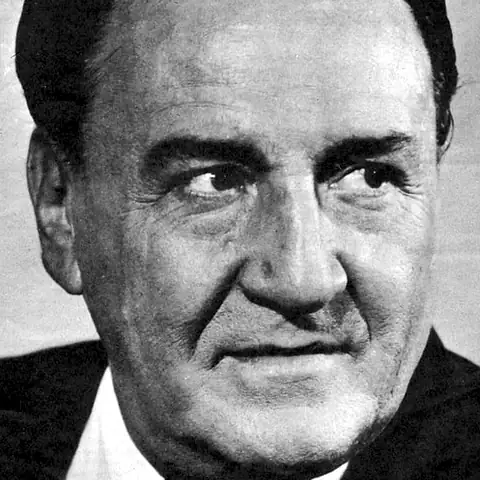
Víctor Raúl Haya de la Torre
Historical figurePE1895-1979

Víctor Raúl Haya de la Torre

Founder of APRA · Presidential candidate of Peru (1931, 1962, 1963)

Peruvian founder of APRA who preached a continental, anti-imperialist movement for Indo-America, was jailed and exiled for decades, and ended his life presiding over Peru's return to civilian rule.

Profile on 12 axes8 of 12 documented
ECONOMYSTATESOCIETYWORLDOwnershipMarketsWelfareAuthoritySecurityStructureMoralityReligionTechnologyCultureTradeForeign
Where they stood

Víctor Raúl Haya de la Torre, axis by axis

  1. PublicPrivate

    The movement called for nationalizing industry, but his own economic program is thinly documented, so the scores are moderate.

  2. PlannedFree
  3. SharedSelf-reliant
  4. DemocraticStrong leader

    APRA ran as a mass party and its supporters rose in armed revolt in 1931, yet Haya fought dictators, accepted elections and ended his career presiding over a democratic assembly.

  5. 05SecurityNo clear record
    LibertyOrder
  6. 06StructureNo clear record
    LocalCentral
  7. 07MoralityNo clear record
    ProgressiveTraditional
  8. SecularReligious

    He led a 1923 march against consecrating Peru to the Sacred Heart, but his wider view of religion is not documented here.

  9. 09TechnologyNo clear record
    EmbraceCaution
  10. MulticulturalNational identity
  11. GlobalProtected

    The anti-imperialist program points to economic nationalism, but exact tariff positions are not documented.

  12. CooperationStrength

    He wanted continental unity, an internationalized Panama Canal and a break from both US and Soviet influence.

4 axes have no clear record, so matching leaves them out.

Who was Víctor Raúl Haya de la Torre?

Haya de la Torre was born in Trujillo in 1895. He became a student leader and worked with workers' popular universities, then was jailed and deported in 1923 after leading a protest march. In exile he announced the Alianza Popular Revolucionaria Americana in Mexico City, with followers in Peru forming the Peruvian Aprista Party. He lost the 1931 presidential election, spent years jailed, hiding or in asylum, and narrowly missed the 1962 presidency. In 1978 he was elected president of the Constituent Assembly. He died in August 1979.

Political views

  • He used the term Indo-America for Latin America south of the Rio Grande, stressing Indigenous peoples and urging the integration of all races and classes.Source: ebsco.com
  • The APRA movement opposed US influence, called for inter-Americanizing the Panama Canal and nationalizing industry, and urged Latin America to break free of imperialist influence.Source: ebsco.com
  • During his exile in the 1920s he studied Mexico, the Soviet Union and Europe, and he called himself a revisionary Marxist.Source: ebsco.com
  • A 1923 protest march against consecrating Peru to the Sacred Heart led to his arrest on sedition charges and deportation.Source: ebsco.com
  • He lost the October 1931 election, and militant Apristas then rose in a rebellion that lasted about sixteen months.Source: ebsco.com
  • In 1962 he won 32.98 percent, just short of the 33 percent required, and the military annulled the vote.Source: ebsco.com
  • After the 1978 elections he was chosen president of the Constituent Assembly and served as ceremonial head of state during the transition to civilian rule.Source: ebsco.com
  • His major works include Por la emancipacion de America Latina (1927) and El antiimperialismo y el APRA (1936).Source: buscabiografias.com

Legacy

Admirers see Haya as one of Latin America's great political thinkers, who built a durable mass party and kept it committed to elections despite repeated persecution, jail and exile. He ended his life presiding over the assembly that returned Peru to civilian rule. Critics point out that APRA's militant followers launched an armed rebellion in 1931 that lasted about sixteen months, and that he never held the presidency despite decades of effort. His thought also moved away from his early Marxism. The party he founded later governed Peru under Alan Garcia, who became president in 1985.

How close are you to Víctor Raúl Haya de la Torre?

Take the 12 Axes test and see which historical figure is your political twin, axis by axis.

Take the test

Víctor Raúl Haya de la Torre: questions

What was APRA?

The Alianza Popular Revolucionaria Americana, a movement Haya announced in Mexico in 1924 that opposed US influence and sought Latin American unity. Its Peruvian branch became the Aprista Party.

Was Haya de la Torre a Marxist?

He called himself a revisionary Marxist in exile, but he later urged Latin America to reject both US imperialism and Soviet communism.

Did Haya de la Torre ever become president of Peru?

No. He lost in 1931, won 32.98 percent in 1962 before the military annulled the vote, and lost in 1963. He did preside over the 1978-1979 Constituent Assembly.

Sources