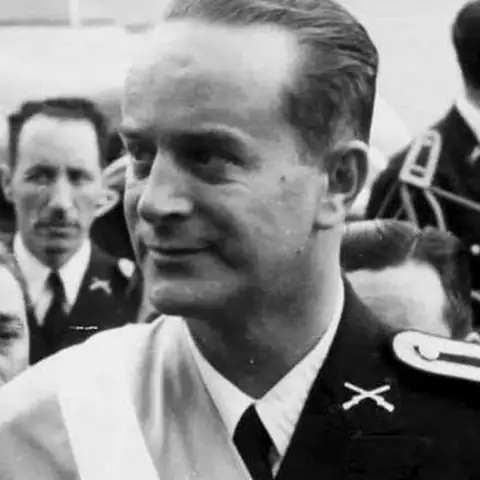
Who was Jacobo Árbenz?
Árbenz was born in 1913 in Quetzaltenango to a Swiss father and a Guatemalan mother, and finished officer training in 1935. He took part in the 1944 movement against dictator Jorge Ubico and served as defense minister under President Juan José Arévalo. He won the presidency in November 1950 and governed from 1951 to 1954. His land reform, Decree 900, and his dispute with the United Fruit Company drew hostility from Washington. After an invasion led by Carlos Castillo Armas and backed by the CIA, the army abandoned him and he resigned on 27 June 1954. He died in exile in Mexico in 1971.
Political views
- One biography calls his government populist and nationalist, not simply communist, and says he wanted a modern capitalist nation with private initiative and Guatemalan capital held by Guatemalans.Source: encyclopedia.com
- Under Decree 900, idle land on holdings above 223 acres could be expropriated and given to peasants, who repaid the cost at 3 to 5 percent of their annual output.Source: encyclopedia.com
- Owners were paid in 25-year bonds based on their own declared tax values. About 100,000 peasants received roughly 1.5 million acres.Source: encyclopedia.com
- About 400,000 of United Fruit's 550,000-plus acres were taken for $1,185,115, the company's own tax figure. The company said the land was worth at least $16 million.Source: encyclopedia.com
- He backed a port, a highway and a hydroelectric plant to compete with United Fruit and US-owned power interests.Source: encyclopedia.com
- He hired exiled communists to staff his reform agencies and refused US pressure to purge them. The peasant federation he supported came under communist influence.Source: ebsco.com
- A shipment of arms from Czechoslovakia reached Guatemala in May 1954. Washington read it as a communist threat, though the army had been barred from buying US weapons since 1948.Source: ebsco.com
- He resigned on 27 June 1954. Castillo Armas then reversed the land reform and banned hundreds of unions.Source: zinnedproject.org
Legacy
Admirers see Árbenz as an elected reformer who tried to give land to the rural poor and was removed because he challenged a US company. His fall ended Guatemala's democratic opening. The new government returned more than 1.5 million acres to United Fruit and other large owners, outlawed over 500 unions and arrested thousands of his supporters, and the country then suffered decades of state terror and civil war. Critics say communists gained too much influence in his government. One biography says that in 1949 he and Arévalo conspired to have rival officer Francisco Arana killed, and that he became a wealthy landowner through bank loans.