12axes-testTake the test
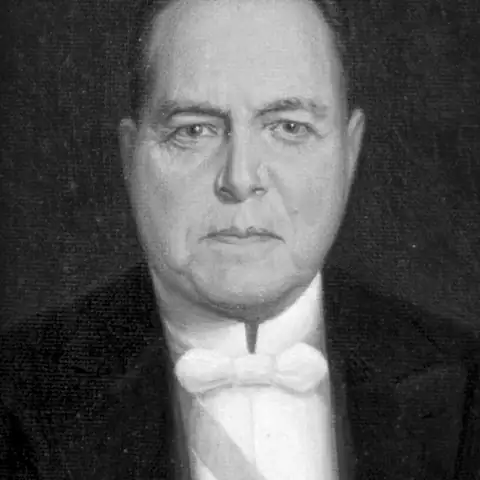
Hipólito Yrigoyen
Historical figureArgentina1852-1933

Hipólito Yrigoyen

President of Argentina (1916-1922, 1928-1930) · Leader of the Radical Civic Union

Argentine leader of the Radical Civic Union and twice president, the first elected under the secret ballot, remembered for economic nationalism and university reform and criticized for labor repression and personal rule.

Profile on 12 axes8 of 12 documented
ECONOMYSTATESOCIETYWORLDOwnershipMarketsWelfareAuthoritySecurityStructureMoralityReligionTechnologyCultureTradeForeign
Where they stood

Hipólito Yrigoyen, axis by axis

  1. PublicPrivate

    He wanted the state to hold oil and other strategic sectors, but he never nationalized them and he left private landholding largely intact.

  2. PlannedFree
  3. SharedSelf-reliant
  4. DemocraticStrong leader

    He was a champion of honest elections and won two free votes, yet he governed mostly by decree and had little patience for rivals.

  5. LibertyOrder
  6. LocalCentral

    He used federal intervention in provinces many times, which pushes this axis toward the center.

  7. 07MoralityNo clear record
    ProgressiveTraditional
  8. 08ReligionNo clear record
    SecularReligious
  9. 09TechnologyNo clear record
    EmbraceCaution
  10. 10CultureNo clear record
    MulticulturalNational identity
  11. GlobalProtected
  12. CooperationStrength

    He kept Argentina neutral in the First World War and opposed US intervention in Latin America.

4 axes have no clear record, so matching leaves them out.

Who was Hipólito Yrigoyen?

Hipólito Yrigoyen was born in Buenos Aires in 1852 and took over the Radical Civic Union after the death of his uncle Leandro Alem in 1896. He pressed for honest elections. In 1916, once the Sáenz Peña Law had introduced the secret, universal and compulsory male vote, he became the first president chosen under it. He served from 1916 to 1922 and again from 1928 to 1930. A military coup led by José Félix Uriburu removed him on 6 September 1930, and he died on 3 July 1933.

Political views

  • He argued that Argentina should control its own currency, credit, transport, energy networks and oil, and he drafted a state central bank that never passed.Source: todo-argentina.net
  • He treated the Radical Civic Union as a redemptive mission rather than an ordinary party, and he saw himself as an apostle more than a chief.Source: todo-argentina.net
  • He revoked public land grants that had been obtained irregularly; the total came to about eight million hectares by 1921.Source: todo-argentina.net
  • A 1921 decree under his government created a general directorate for the state oil company YPF, though he failed to nationalize hydrocarbons.Source: todo-argentina.net
  • He kept Argentina neutral in the First World War and protested to both sides over damaged ships, even under pressure to join the fighting.Source: todo-argentina.net
  • He sympathized with the 1918 student movement at Córdoba and backed shared governance of universities.Source: todo-argentina.net
  • Opponents charged that he ruled with an overly strong executive and that his federal interventions in the provinces upset the balance of power.Source: worldhistoryedu.com

Legacy

Admirers honor Yrigoyen as the first president who did not directly represent the landowning oligarchy, a champion of free elections, economic sovereignty and university reform. Critics point to his rule by decree and his unwillingness to bargain with rivals. During the Tragic Week of January 1919, police and paramilitary groups killed striking workers in Buenos Aires; the government counted about 65 dead, while some historians estimate more than 700. In Patagonia in 1920 and 1921 the army shot hundreds of rural strikers, and he refused to prosecute those responsible. The 1930 coup that toppled him opened the fraud-ridden Infamous Decade.

How close are you to Hipólito Yrigoyen?

Take the 12 Axes test and see which historical figure is your political twin, axis by axis.

Take the test

Hipólito Yrigoyen: questions

Was Hipólito Yrigoyen a dictator?

No. He was elected president twice, in 1916 and 1928, under the secret ballot. Critics did say he governed mostly by decree and sidelined Congress, and his rivals called him authoritarian.

Why was Yrigoyen overthrown?

After the 1929 crash he lost middle-class support, and the Radicals lost the March 1930 legislative elections. General José Félix Uriburu led the coup on 6 September 1930, with backing from the army and conservative opponents.

What did Yrigoyen believe about oil?

He wanted the state to play a decisive role. In 1921 his government set up a general directorate for YPF, but he did not manage to nationalize hydrocarbons.

Sources