12axes-testTake the test
Roy Jenkins
Historical figureUnited Kingdom1920-2003

Roy Jenkins

Home Secretary (1965-1967, 1974-1976) · Chancellor of the Exchequer (1967-1970)

Welsh Labour figure who pushed through the liberal social laws of the 1960s as Home Secretary, then headed the European Commission and helped found the SDP.

Profile on 12 axes11 of 12 documented
ECONOMYSTATESOCIETYWORLDOwnershipMarketsWelfareAuthoritySecurityStructureMoralityReligionTechnologyCultureTradeForeign
Where they stood

Roy Jenkins, axis by axis

  1. PublicPrivate
  2. PlannedFree

    He was a revisionist social democrat who liked the mixed economy and kept a firm grip on the budget as Chancellor, so he lands near the middle.

  3. SharedSelf-reliant
  4. DemocraticStrong leader
  5. LibertyOrder

    He ended flogging in prisons and held off calls to bring back hanging, yet rushed through the 1974 Prevention of Terrorism Act after the Birmingham pub bombings. He ends up moderately on the liberty side.

  6. LocalCentral

    He wanted faster political and monetary union in Europe. The record on devolution within the UK is thin, so he is scored only mildly central.

  7. ProgressiveTraditional

    He supported changing the laws on homosexuality, abortion, divorce and stage censorship, and said he wanted a more civilised, less stuffy society. That earns a strongly progressive score.

  8. SecularReligious

    His reforms took traditional religious morality out of much of the law, though he never campaigned against religion itself, so he is only mildly secular.

  9. 09TechnologyNo clear record
    EmbraceCaution
  10. MulticulturalNational identity
  11. GlobalProtected
  12. CooperationStrength

One axis has no clear record, so matching leaves it out.

Who was Roy Jenkins?

Roy Jenkins grew up in Abersychan, south Wales, where he was born in 1920. His father was a miners' union leader who later became a Labour MP. Roy won a first at Oxford and served as a wartime codebreaker at Bletchley Park. He entered Parliament in 1948 and sat for Birmingham Stechford from 1950 to 1977. In Harold Wilson's governments he was Home Secretary, then Chancellor. He resigned as Labour deputy leader in 1972 over the plan for a referendum on Europe, then led the Yes side in 1975. After heading the European Commission he co-founded the SDP in 1981 and later led the Liberal Democrats in the Lords.

Political views

  • In the Home Office he supported law reform on homosexuality, abortion and divorce, and it was on his watch that hanging was ended in practice.Source: biography.wales
  • In 1966 he described integration as equal chances alongside cultural variety, not forced assimilation, and he brought in laws against race and sex discrimination.Source: en.wikipedia.org
  • As Chancellor he raised taxes sharply and kept spending tight to win back faith in the pound after devaluation.Source: en.wikipedia.org
  • In 1971 he led 69 Labour MPs into the lobby to vote for joining the Common Market, and in 1975 he led the Yes side in the referendum.Source: biography.wales
  • In his 1979 Dimbleby lecture he made the case for politics of the centre and a break from the two-party system.Source: biography.wales
  • In 1997 he chaired the commission on voting systems, which proposed a more proportional way of electing MPs.Source: en.wikipedia.org

Legacy

Admirers say Jenkins delivered the boldest social reforms of any postwar Labour government, mended the public finances as Chancellor and helped keep Britain in Europe in 1975. Liberals and social democrats see him as a father of today's centre ground, and Tony Blair sought his counsel ahead of 1997. Social conservatives blame his Home Office changes for a permissive society. Many Labour members never forgave the SDP, which they thought divided the anti-Conservative vote. Civil liberties campaigners point to the 1974 anti-terrorism law that passed under him.

How close are you to Roy Jenkins?

Take the 12 Axes test and see which historical figure is your political twin, axis by axis.

Take the test

Roy Jenkins: questions

Was Roy Jenkins a socialist?

He came from the moderate, social democratic wing of Labour. He backed a mixed economy and strong public services, and left the party in 1981 to help found the SDP.

What laws did Roy Jenkins change as Home Secretary?

His list includes looser laws on homosexuality, abortion, divorce and theatre censorship, plus the practical end of hanging. He also brought in laws against race discrimination.

Why did Jenkins help create the SDP?

He and three other senior figures, known as the Gang of Four, felt Labour had drifted too far left and away from Europe. In 1981 they formed a new party for the centre ground.

Sources

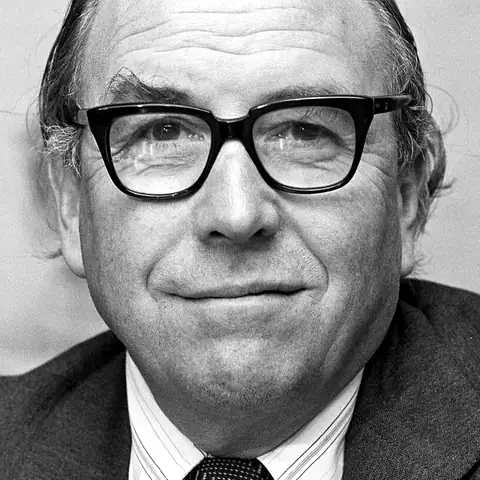
Portrait: Roy Jenkins 1977 (cropped).jpg by Jean-Louis Debaize, CC BY 4.0, via Wikimedia Commons. Cropped and converted to grayscale by 12axes-test.com.