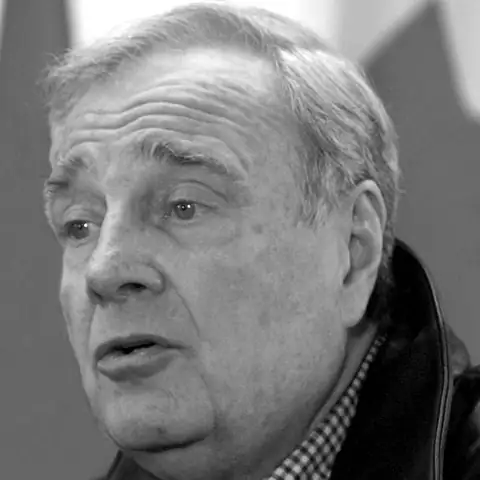
Who is Paul Martin?
Paul Martin, a former Canadian prime minister, was born in Windsor, Ontario, in 1938. His father held a cabinet post under the Liberals. He trained as a lawyer, then ran Canada Steamship Lines as its president and chief executive from 1973. In 1988 voters in Montreal's LaSalle-Émard sent him to Parliament. Jean Chrétien made him finance minister, a post he held from 1993 to 2002. He took the top job in December 2003, led a minority government after the 2004 vote, and was defeated in 2006. Today he works on aid and Indigenous schooling projects and has no seat or office.
Political views
- As finance minister he eliminated the federal deficit with deep spending cuts and program reform, and led a big overhaul of the Canada Pension Plan.Source: en.wikipedia.org
- Pushed to create the G20 grouping of finance ministers and central bank heads, and chaired it first.Source: en.wikipedia.org
- Passed the 2005 Civil Marriage Act. It defines marriage as between two persons and shields religious officials who decline to marry same-sex couples.Source: laws-lois.justice.gc.ca
- Put his name to the Kelowna Accord, made with the provinces and Indigenous leaders, which aimed to close gaps in health, schooling, housing and jobs.Source: en.wikipedia.org
- Agreed with the provinces in 2004 on more money for health care.Source: en.wikipedia.org
- Criticised the United States for staying out of the Kyoto Protocol, and the US ambassador publicly scolded him for it in December 2005.Source: cbc.ca
- In February 2005 his government told Parliament that Canada would stay out of the American missile defence plan.Source: en.wikipedia.org
- Commissioned the Gomery inquiry to look into a sponsorship scandal that dated from his predecessor's time.Source: en.wikipedia.org
Legacy
To supporters, Martin is the finance minister who pulled Canada back from a looming debt crisis, with a run of surpluses and a restored AAA credit rating, and the prime minister who moved same-sex marriage and Indigenous reconciliation forward. He is still active on world development and Indigenous schooling. Critics say the deficit cuts starved provincial health and social services, and an Economist correspondent reported that Ottawa insiders were calling him 'Mr. Dithers' over indecision. His minority government was hurt by the sponsorship scandal and by the inquiry he himself had begun, and it fell on a no-confidence vote in 2005. A few economists hold that restraint plus growth would have closed the gap without cutting services.