12axes-testTake the test
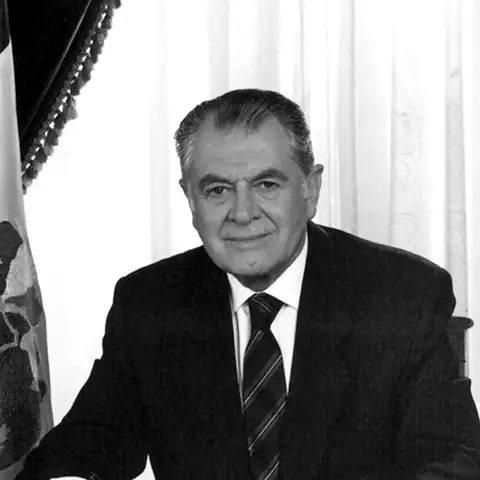
Patricio Aylwin
Historical figureChile1918-2016

Patricio Aylwin

President of Chile (1990-1994) · President of the Senate of Chile (1971-1972)

Christian Democrat who led the No campaign against Pinochet and then served as Chile's first elected president after the dictatorship, keeping the market economy while investigating abuses.

Profile on 12 axes6 of 12 documented
ECONOMYSTATESOCIETYWORLDOwnershipMarketsWelfareAuthoritySecurityStructureMoralityReligionTechnologyCultureTradeForeign
Where they stood

Patricio Aylwin, axis by axis

  1. PublicPrivate

    He slowed Allende's copper nationalization by demanding a constitutional route, then as president kept the free-market model he inherited. Mildly toward private ownership.

  2. PlannedFree
  3. SharedSelf-reliant
  4. DemocraticStrong leader

    He first welcomed the 1973 coup, then led the democratic opposition from 1976 and the No campaign in 1988. He later said he regretted not condemning the coup at once.

  5. LibertyOrder

    He kept the 1978 amnesty law in place and left Pinochet in command of the army, but freed nearly all Pinochet-era security prisoners. Leans slightly toward liberty, within heavy constraints.

  6. LocalCentral

    Weak basis. The unitary state stayed, though his government introduced directly elected municipal representatives.

  7. 07MoralityNo clear record
    ProgressiveTraditional
  8. 08ReligionNo clear record
    SecularReligious
  9. 09TechnologyNo clear record
    EmbraceCaution
  10. 10CultureNo clear record
    MulticulturalNational identity
  11. 11TradeNo clear record
    GlobalProtected
  12. 12Foreign policyNo clear record
    CooperationStrength

6 axes have no clear record, so matching leaves them out.

Who was Patricio Aylwin?

Patricio Aylwin, a lawyer from Viña del Mar, joined the Falange Nacional in 1945 and helped found the Christian Democratic Party in 1957. He was a senator from 1965 and Senate president in 1971-1972, and he opposed Salvador Allende. He first accepted the 1973 military takeover, then turned against Augusto Pinochet. In 1988 he spoke for the No side in the plebiscite, and in December 1989 he won the presidency with 55.2 percent. He governed from March 1990 to March 1994, with Pinochet still heading the army. Aylwin died in Santiago in April 2016.

Political views

  • As Senate president he helped delay the nationalization of copper by insisting that expropriations pass through a constitutional reform.Source: cidob.org
  • Welcomed the 1973 coup at first, publicly rejected the dictatorship in 1976, and said in 2003 that he regretted not condemning the coup from the start.Source: cidob.org
  • Favored a negotiated, non-rupturist exit from military rule, and after the 1988 plebiscite negotiated 54 constitutional reforms that voters approved in July 1989.Source: bcn.cl
  • In April 1990 he created the Truth and Reconciliation Commission; its report listed 2,279 deaths and disappearances, and he asked the victims' families for forgiveness.Source: hrw.org
  • Kept the free-market model of the military government but added state social policy under the banner of growth with equity.Source: cidob.org
  • Worked within limits he could not remove: the 1978 amnesty law, appointed senators and Pinochet's command of the army.Source: hrw.org
  • Said in 2012 that critics of the transition were ignorant of what really happened, while still calling Pinochet a dictator.Source: demdigest.org

Legacy

Admirers credit Aylwin with steering Chile back to democracy without a new break with the army, and with the first official account of the dictatorship's killings. Under him growth averaged about 6 percent a year and inflation and unemployment fell. Critics say he put stability ahead of justice. The amnesty law stood, the Rettig Report named no perpetrators and had no criminal effect, and most abuses went unpunished. His handling of the army's show of force in 1993 was called too conciliatory, and income inequality stayed very high.

How close are you to Patricio Aylwin?

Take the 12 Axes test and see which historical figure is your political twin, axis by axis.

Take the test

Patricio Aylwin: questions

Did Patricio Aylwin support the 1973 coup?

At first he accepted the military takeover, and his party backed the army's stated aims. By 1976 he had broken with Pinochet, and in 2003 he said he regretted not condemning the coup from the start.

What was the Rettig Commission?

It was the National Commission for Truth and Reconciliation, created by Aylwin in April 1990. Its report counted 2,279 deaths and disappearances under the dictatorship but could not name perpetrators.

Did Aylwin keep Pinochet's economic model?

Largely yes. He kept the market system and added state social spending, calling the approach growth with equity. Inequality stayed very high.

Sources

Portrait: Patricio Aylwin (1990).jpg by Biblioteca del Congreso Nacional de Chile, CC BY 3.0 cl, via Wikimedia Commons. Cropped and converted to grayscale by 12axes-test.com.