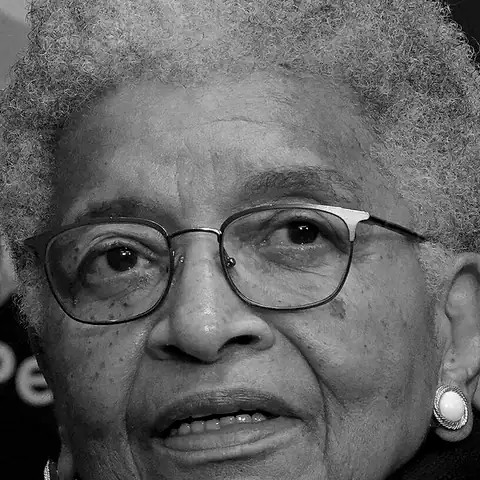
Who is Ellen Johnson Sirleaf?
Sirleaf was born in Monrovia in 1938 and was educated mostly in the United States, including a master's degree at Harvard. She became Liberia's finance minister in 1979, fled after the 1980 coup, and later worked at Citicorp, the World Bank and the UN Development Programme. In 1985 she was arrested and sentenced to ten years for criticizing the Doe regime, and she left for the United States in 1986. She resigned her UN post to run in 1997 and finished second. Elected president in 2005, she took office in January 2006, won a second term in 2011 and shared the 2011 Nobel Peace Prize. She stepped down in January 2018.
Political views
- Her official biography credits her with attracting more than $16 billion in foreign direct investment while rebuilding the country after civil war.Source: un.org
- She negotiated $4.6 billion in external debt forgiveness and the lifting of UN trade sanctions, which let Liberia access international markets again.Source: un.org
- In 1979, as finance minister, she introduced measures against mismanagement of government finances, and before the 2005 election she chaired the Governance Reform Commission and led anti-corruption reform.Source: un.org
- In 2007 she signed an executive order making elementary education free and compulsory.Source: girlmuseum.org
- She was arrested and sentenced to ten years for speaking out against the Doe regime.Source: girlmuseum.org
- She resigned a senior UN post to run in the 1997 presidential election, finished second and went into self-imposed exile in Côte d'Ivoire.Source: un.org
- She was elected the first female chair of ECOWAS in 2016, and she co-chaired a UN panel on the post-2015 development agenda.Source: un.org
Legacy
Admirers credit Sirleaf with leading Liberia out of two civil wars toward debt relief, restored trade, schools and an orderly handover of power. She was the first woman to win the Mo Ibrahim Prize for African leadership, and The Economist called her the best president Liberia has had. Critics point to the 2009 Truth and Reconciliation Commission report, which named her among 50 people it said should be barred from public office for 30 years because she had backed Charles Taylor's rebellion in 1989; she later apologized. Others charge that corruption persisted under her government and that several relatives held senior posts.