12axes-testTake the test
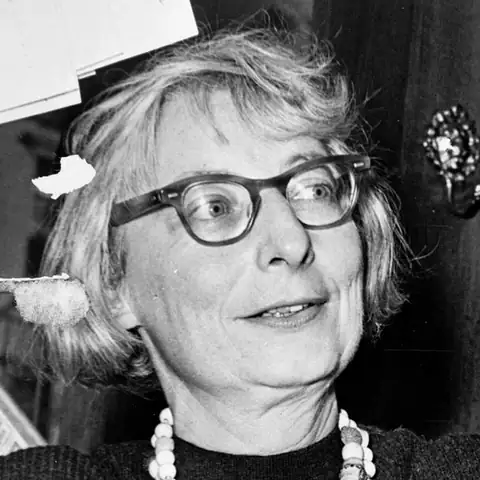
Jane Jacobs
Historical figureUnited States1916-2006

Jane Jacobs

Urbanist and author of The Death and Life of Great American Cities · Editor at Architectural Forum

American-Canadian writer who defended lively, dense city neighborhoods against highway building and slum clearance, and later argued that cities drive economic growth.

Profile on 12 axes6 of 12 documented
ECONOMYSTATESOCIETYWORLDOwnershipMarketsWelfareAuthoritySecurityStructureMoralityReligionTechnologyCultureTradeForeign
Where they stood

Jane Jacobs, axis by axis

  1. PublicPrivate

    Her later books praise small private business and also argue that commerce and government need separate codes. The score is a low-confidence nudge to private.

  2. PlannedFree

    She argued for diverse small enterprises and import replacement and distrusted big planning schemes. She did not defend unregulated markets, so the score is moderate.

  3. 03WelfareNo clear record
    SharedSelf-reliant
  4. DemocraticStrong leader
  5. 05SecurityNo clear record
    LibertyOrder
  6. LocalCentral

    She fought top-down renewal, argued that cities rather than nations are the basic economic unit and backed Quebec independence.

  7. 07MoralityNo clear record
    ProgressiveTraditional
  8. 08ReligionNo clear record
    SecularReligious
  9. 09TechnologyNo clear record
    EmbraceCaution
  10. MulticulturalNational identity

    She prized mixed uses and varied people in neighborhoods. That is about diversity of urban life, not immigration policy, so the score is moderate.

  11. 11TradeNo clear record
    GlobalProtected
  12. CooperationStrength

    She was arrested protesting the Vietnam draft and moved to Canada so her sons could avoid service.

6 axes have no clear record, so matching leaves them out.

Who was Jane Jacobs?

Jacobs was born in Scranton, Pennsylvania, in 1916 and moved to New York City in 1934. She worked as a stenographer and freelance writer, studied for two years at Columbia and was an editor at Architectural Forum from 1952. Her 1961 book The Death and Life of Great American Cities attacked mid-century planning and slum clearance. She helped lead local fights against plans to renew Greenwich Village and to run a highway through Washington Square Park. In 1968 she moved to Toronto so that her sons could avoid the Vietnam draft, and she wrote on cities and economies until Dark Age Ahead in 2004. She died in Toronto in 2006.

Political views

  • Her 1961 book argued that cities thrive in dense, diverse areas with easy access to services, mixed buildings and short blocks. This ran against the urban modernists.Source: encyclopedia.com
  • She challenged slum clearance and large housing projects, and argued that small improvements and mixed uses make neighborhoods succeed.Source: ebsco.com
  • She attacked mid-century planning, including urban renewal, for tearing down communities and separating land uses into lifeless districts.Source: encyclopedia.com
  • She praised street life, describing her own block as an intricate sidewalk ballet.Source: encyclopedia.com
  • She protested a 1961 plan to renew Greenwich Village and opposed Robert Moses's proposed highway through Washington Square Park.Source: encyclopedia.com
  • In The Economy of Cities she argued that healthy cities enrich their regions through import replacement, and in Cities and the Wealth of Nations she called cities, not nations, the basic economic unit.Source: ebsco.com
  • In Systems of Survival she described two moral codes, the commercial and the guardian, and said problems arise when people use the wrong one for their work.Source: ebsco.com
  • She was arrested protesting the draft during the Vietnam War, moved to Toronto, and in The Question of Separatism (1980) backed Quebec's independence.Source: encyclopedia.com

Legacy

Jacobs changed how planners and the public think about cities, and her ideas about mixed use, short blocks and lively street life are now widely taught and cited. Admirers credit her with leading neighborhood resistance to Moses's highway plans. Critics said her research was not rigorous, and Lewis Mumford argued that in her preferred city beauty would have no place. Her later work on economics won recognition too, and Cities and the Wealth of Nations won a Los Angeles Times Book Prize.

How close are you to Jane Jacobs?

Take the 12 Axes test and see which historical figure is your political twin, axis by axis.

Take the test

Jane Jacobs: questions

What did Jane Jacobs believe about city planning?

She opposed slum clearance, large housing projects and highways through neighborhoods. She argued that dense, mixed-use areas with short blocks and street life make cities thrive.

Why did Jane Jacobs move to Toronto?

She moved in 1968 with her husband and two sons to avoid the Vietnam draft. She had been arrested for protesting the draft.

Who was Jane Jacobs's opponent Robert Moses?

Moses was the New York planner behind highway plans such as the Lower Manhattan Expressway. Jacobs opposed his proposed highway through Washington Square Park, and the expressway plan later failed.

Sources