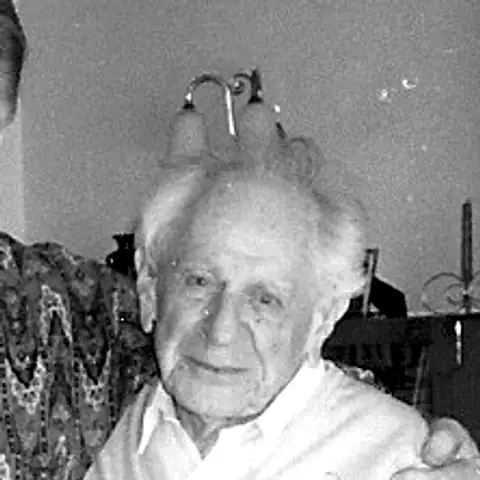
Who was Karl Popper?
Karl Popper grew up in Vienna, where he was born in 1902. In 1919 he briefly called himself a communist. A bloody street clash turned him from Marxism, and he came to think socialism put personal freedom at risk. His work on the philosophy of science, including the test of falsifiability, made him famous. He sat out the Second World War in New Zealand and published The Open Society and Its Enemies in 1945. From 1946 he taught at the London School of Economics. He took British citizenship, was knighted in 1965 and died in 1994.
Political views
- He denied that history follows fixed laws, so he held that confident forecasts of the future, as in Marxism, are impossible and feed totalitarian thinking.Source: plato.stanford.edu
- He stood for the open society: a liberal democracy in which rulers can be criticized and quarrels are settled by argument, not force.Source: plato.stanford.edu
- For him the chief worth of democracy was that it lets people remove a government without bloodshed.Source: iep.utm.edu
- He preferred piecemeal social engineering, which tackles one problem at a time and learns from errors, to grand utopian blueprints.Source: plato.stanford.edu
- He thought that the job of public policy is to cut misery, while each person is left to chase happiness.Source: iep.utm.edu
- He feared the harm of unchecked capitalism and wanted the state to shield the economically weak, with a minimum income as one tool.Source: iep.utm.edu
Legacy
Few books did more to defend liberal democracy in the 20th century than The Open Society and Its Enemies. It cast Plato, Hegel and Marx as forerunners of closed societies and helped shape Cold War liberalism. His paradox of tolerance is still quoted whenever people argue about free speech and extremism. Both the moderate left and the moderate right lay claim to him, including social democrats and also market liberals who were influenced by his friend Friedrich Hayek. Critics say he misread Plato and Hegel, that step-by-step reform says little about large questions of justice, and that the paradox of tolerance can be stretched to defend censorship.
In their own words
“Unlimited tolerance must lead to the disappearance of tolerance.”