12axes-testTake the test
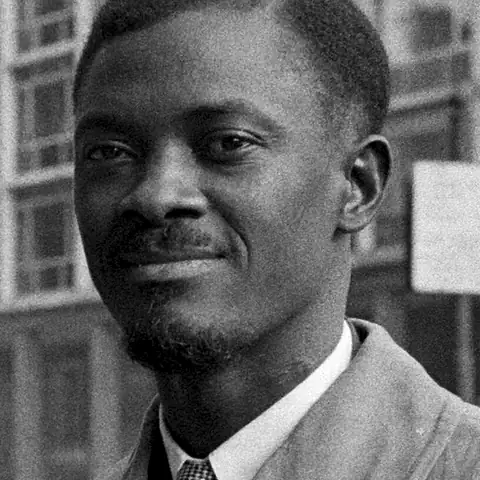
Patrice Lumumba
Historical figureCD1925-1961

Patrice Lumumba

First Prime Minister of the Republic of the Congo (1960) · Co-founder and leader of the Congolese National Movement

Congo's first prime minister, a nationalist who wanted a unitary state and African unity. He was dismissed within three months of independence and killed in Katanga in 1961.

Profile on 12 axes6 of 12 documented
ECONOMYSTATESOCIETYWORLDOwnershipMarketsWelfareAuthoritySecurityStructureMoralityReligionTechnologyCultureTradeForeign
Where they stood

Patrice Lumumba, axis by axis

  1. PublicPrivate

    A weak, mild lean toward public control.

  2. 02MarketsNo clear record
    PlannedFree
  3. SharedSelf-reliant

    His independence speech asked for social justice, fair pay and equal rights.

  4. 04AuthorityNo clear record
    DemocraticStrong leader
  5. LibertyOrder

    He denounced forced labor, segregation and violent repression under colonial rule.

  6. LocalCentral

    His party favored a unitary state. Kasavubu favored a federal system, and the two settled on a compromise coalition.

  7. 07MoralityNo clear record
    ProgressiveTraditional
  8. 08ReligionNo clear record
    SecularReligious
  9. 09TechnologyNo clear record
    EmbraceCaution
  10. 10CultureNo clear record
    MulticulturalNational identity
  11. GlobalProtected

    The speech stressed economic independence for the Congo, which points to some protection of national interests.

  12. CooperationStrength

    He declared positive neutralism and backed liberation across Africa, but he turned to the Soviet Union when the UN would not act on Katanga's secession.

6 axes have no clear record, so matching leaves them out.

Who was Patrice Lumumba?

Patrice Lumumba, born in 1925 in the Belgian Congo, worked as a postal clerk and brewery sales manager and was jailed for embezzlement before turning to politics. In 1958 he helped found the Congolese National Movement, the first national party. It won the May 1960 election, and he became prime minister at independence on 30 June 1960 under President Joseph Kasavubu. After Katanga seceded, he sought Soviet help. Kasavubu dismissed him on 5 September, Colonel Mobutu's army took control, and Lumumba was arrested. He was flown to Katanga and killed in January 1961.

Political views

  • Turned toward Pan-Africanism and Congolese nationalism while in prison in 1955, and favored a unitary form of government.Source: sahistory.org.za
  • Founded a movement that aimed to overcome tribal divisions and build one national identity in an independent, secular state.Source: biografiasyvidas.com
  • In his independence speech he condemned forced labor, unequal laws and segregation under Belgian rule and asked for social justice and fair pay.Source: marxists.org
  • Asked Congolese people to set aside tribal divisions and urged fair treatment of foreign residents.Source: marxists.org
  • Declared positive neutralism, rejecting imported ideologies from both the West and the Soviet bloc.Source: ebsco.com
  • Turned to the Soviet Union after the UN refused to act against Katanga's secession, and used Soviet troops and supplies, which drew criticism.Source: ebsco.com

Legacy

Many Africans honor Lumumba as a martyr of anti-colonial struggle who gave voice to Congolese dignity and a united Congo. His independence speech is still widely quoted. Critics argue that he was inexperienced and that turning to Soviet help pulled the Congo deeper into the Cold War and alarmed Western governments. Kasavubu's dismissal of him was legally dubious. He was seized by Mobutu's forces and handed to the Katanga secessionists, who murdered him. Belgian and CIA involvement has long been suspected. His death left the new state in turmoil.

How close are you to Patrice Lumumba?

Take the 12 Axes test and see which historical figure is your political twin, axis by axis.

Take the test

Patrice Lumumba: questions

Was Patrice Lumumba a communist?

He called his policy positive neutralism and rejected imported ideologies from East and West. He did seek Soviet help against Katanga's secession, which led critics to label him pro-Soviet.

How did Patrice Lumumba die?

Mobutu's troops arrested him after his dismissal in September 1960. He was flown to Katanga in January 1961 and killed there. Belgian and CIA involvement has long been suspected.

What did Lumumba believe about the Congo's government?

He favored a unitary state and a national identity above tribe or region. President Kasavubu preferred a federal system, and they formed a compromise coalition.

Sources

Portrait: PatriceLumumba1960.jpg by Harry Pot for Anefo ), CC BY 4.0, via Wikimedia Commons. Cropped and converted to grayscale by 12axes-test.com.