12axes-testTake the test
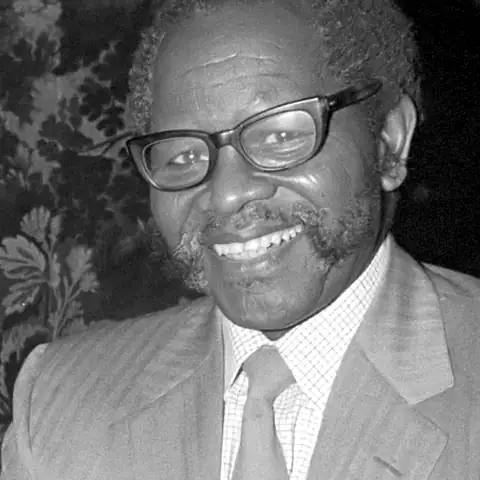
Oliver Tambo
Historical figureSouth Africa1917-1993

Oliver Tambo

Leader of the African National Congress in exile (1967-1991) · ANC National Chairman (1991-1993)

Longtime head of the African National Congress in exile. He kept the movement together through three decades of apartheid, pressed for sanctions, and held to a non-racial vision of South Africa.

Profile on 12 axes6 of 12 documented
ECONOMYSTATESOCIETYWORLDOwnershipMarketsWelfareAuthoritySecurityStructureMoralityReligionTechnologyCultureTradeForeign
Where they stood

Oliver Tambo, axis by axis

  1. PublicPrivate

    He sat on the committee that drafted the Freedom Charter, which he and the ANC endorsed.

  2. PlannedFree

    He sat on the committee that drafted the Freedom Charter, which he and the ANC endorsed.

  3. SharedSelf-reliant
  4. DemocraticStrong leader

    He pursued a democratic, non-racial South Africa, but ran an exile movement with a military wing and detention camps where abuses occurred. Mildly democratic.

  5. 05SecurityNo clear record
    LibertyOrder
  6. 06StructureNo clear record
    LocalCentral
  7. 07MoralityNo clear record
    ProgressiveTraditional
  8. 08ReligionNo clear record
    SecularReligious
  9. 09TechnologyNo clear record
    EmbraceCaution
  10. MulticulturalNational identity

    He stated that the ANC sought to create a united democratic and non-racial society.

  11. 11TradeNo clear record
    GlobalProtected
  12. CooperationStrength

    He built diplomatic and sanctions campaigns at the UN and sought Soviet backing, while leading an armed struggle. Toward cooperation.

6 axes have no clear record, so matching leaves them out.

Who was Oliver Tambo?

Oliver Tambo was born in 1917 near Bizana in the Eastern Cape and studied at Fort Hare, where he met Nelson Mandela. He helped found the ANC Youth League in 1943 and, in 1952, opened South Africa's first Black law partnership with Mandela. After Sharpeville he left the country in March 1960 to build the ANC abroad. He became acting president on Albert Luthuli's death in 1967 and led the movement through exile in Zambia and Tanzania, the armed wing Umkhonto we Sizwe and sanctions campaigns. A stroke in 1989 left him unable to speak. He returned in December 1990 and died in Johannesburg in April 1993.

Political views

  • Helped found the ANC Youth League in 1943-1944 and became its secretary.Source: sahistory.org.za
  • Served on the National Action Committee behind the Freedom Charter, and headed an ANC commission in 1959 that endorsed non-racialism.Source: sahistory.org.za
  • Left South Africa on 27 March 1960 and led the ANC's external mission, taking over leadership of Umkhonto we Sizwe after the 1963 Rivonia arrests.Source: sahistory.org.za
  • Offered his resignation at the 1969 Morogoro Conference and was persuaded to stay. A Revolutionary Council was formed that included South African Communist Party leaders.Source: sahistory.org.za
  • Pushed the case for sanctions and isolation of apartheid, addressing the UN in 1963 and the Security Council in 1977.Source: sahistory.org.za
  • Headed Operation Vula and, in 1984-1985, broadcast calls to make South Africa ungovernable.Source: sahistory.org.za
  • Chaired the 1985 Kabwe conference after mutinies in ANC camps in Angola, and commissioned a code of conduct, although abuses continued.Source: sahistory.org.za

Legacy

South Africans honor Tambo as the patient builder of the ANC abroad, a unifier who kept a banned movement together, won international support and, in 1990, saw it unbanned. Admirers also praise his commitment to non-racial democracy. Critics point to the armed campaign and the camps in Angola, where the 1983 to 1985 mutinies were investigated by the Stuart Commission and abuses of detainees continued after he commissioned a code of conduct. He opened the ANC to close cooperation with the Communist Party and Soviet bloc. Johannesburg's airport has borne his name since 2006.

How close are you to Oliver Tambo?

Take the 12 Axes test and see which historical figure is your political twin, axis by axis.

Take the test

Oliver Tambo: questions

What was Oliver Tambo's role in the ANC?

He led the ANC for about three decades from exile, as acting president from 1967 and president from the 1969 Morogoro conference, until a stroke in 1989. He became National Chairman in 1991.

Did Oliver Tambo support armed struggle?

Yes. He took over leadership of Umkhonto we Sizwe after the 1963 Rivonia arrests and set up camps in Tanzania and Zambia, while also campaigning for sanctions and diplomacy.

Was Oliver Tambo a communist?

There is no record of him being a member of the Communist Party. He worked closely with it and sought Soviet bloc support, and its leaders sat on the ANC Revolutionary Council.

Sources

Portrait: Oliver Tambo (1981).jpg by Rob Croes for Anefo, CC BY-SA 3.0 nl, via Wikimedia Commons. Cropped and converted to grayscale by 12axes-test.com.