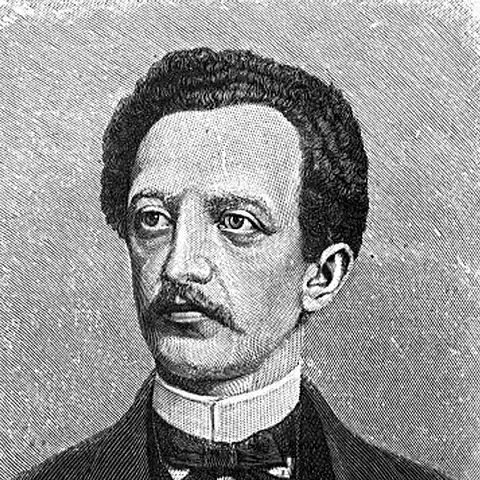
Who was Ferdinand Lassalle?
Ferdinand Lassalle was born in Breslau in 1825 and became a socialist writer and speaker. In 1862 he delivered the lecture usually called the Workers' Programme, and in 1863 he became president of the General German Workers' Association, which he led for less than two years. He held that an iron law of wages kept workers poor under capitalism and proposed state-financed cooperatives as the cure. He met Otto von Bismarck and offered workers' backing in return for universal suffrage and state aid, but nothing came of it. Lassalle was killed in a duel on 28 August 1864.
Political views
- Rejected the liberal night-watchman idea of the state as a policeman's idea, and argued that the state should unite individuals so they can reach levels of education and freedom they could not reach alone.Source: marxists.org
- Called the working class the fourth estate, whose interest was the interest of humanity as a whole.Source: marxists.org
- Argued that universal, direct suffrage was the workers' essential political tool, and condemned the property qualification and Prussia's three-class voting system.Source: marxists.org
- Showed that indirect taxes on salt, bread and fuel fell mostly on the poor and wanted a state that secured steadier wages and made education possible.Source: marxists.org
- Told workers in 1863 that the state belongs to them: it is the consolidated people, not the property of the upper classes.Source: marxists.org
- Argued that an iron law of wages kept workers permanently poor under capitalism, and proposed that the state finance workers' cooperatives.Source: encyclopedia.com
- Met Bismarck and offered workers' support in exchange for state-backed cooperatives, hoping to split workers from the liberals.Source: encyclopedia.com
Legacy
Admirers call Lassalle the founder of the German Social Democratic movement. He gave workers their first national organization, and his demand for universal suffrage and a state that serves workers helped shape later welfare policy. Critics note that his association never grew as he predicted, with fewer than 8,000 members by 1868, and that his organizational and theoretical contributions were limited. His talks with Bismarck brought nothing. His death in a duel, reportedly over a woman, ended his career at 39, and the movement merged into a party led by others in 1869.