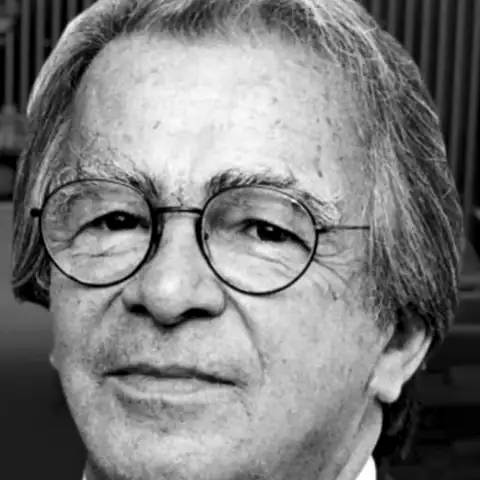
Who was Darcy Ribeiro?
Darcy Ribeiro, born in Montes Claros, trained as an anthropologist in Sao Paulo and worked for the Indian Protection Service from 1947. He helped create the Xingu Indigenous Park and the Museu do Indio. In 1962 he co-founded the University of Brasilia and became its first rector. Under Joao Goulart he served as education minister and head of the Civil House. The 1964 coup stripped his political rights, and he spent about twelve years in exile across Latin America. Back in Brazil, he became Leonel Brizola's vice-governor in Rio, then a senator, and he joined the Brazilian Academy of Letters in 1992.
Political views
- Worked beside Anisio Teixeira to defend public schools and full-time education, which later led to the CIEPs, full-time public schools in Rio.Source: revistapesquisa.fapesp.br
- As Goulart's education minister and Civil House chief, he worked on the basic reforms that the military coup of 1964 cut short.Source: diariodepernambuco.com.br
- In a 1952 UNESCO report he rejected the idea that Indigenous peoples had peacefully assimilated and argued that Brazil's formation involved their extermination.Source: revistapesquisa.fapesp.br
- Argued that Brazil's problems came from colonization rather than ethnic diversity, and described Brazilians as a new people formed from violent encounters.Source: revistapesquisa.fapesp.br
- In exile he advised Salvador Allende in Chile and Velasco Alvarado in Peru and helped set up university reform programs in several countries.Source: academia.org.br
- Ran as Leonel Brizola's vice-governor of Rio de Janeiro in 1982 and coordinated a program meant to build 500 CIEPs.Source: academia.org.br
- Created the State University of North Fluminense, founded in 1991, and was a PDT senator from 1991 until his death.Source: revistapesquisa.fapesp.br
Legacy
Admirers see Ribeiro as a rare scholar who also built institutions: a university model copied in later schools, a national network of full-time schools and a foundational account of Brazilian identity. He gave Indigenous peoples a central place in Brazil's story. Critics note that his university project was cut short by the coup and only partly revived, that the CIEPs were costly and uneven in later years, and that his early anthropology showed evolutionist and Eurocentric traits. He admitted that he had failed to make Brazil what it could be.