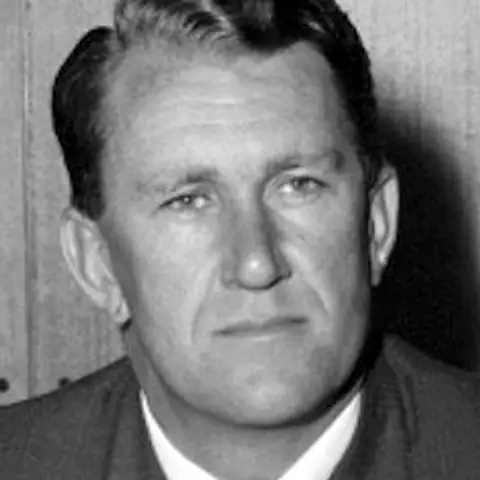
Who was Malcolm Fraser?
Malcolm Fraser grew up on a Victorian grazing property and studied at Oxford. Aged 25, he won the Wannon seat in 1955. He later served as army minister while Australia fought in Vietnam. In 1975 he became Liberal leader and led the Senate in blocking the Whitlam government's budget. When Governor-General Sir John Kerr removed Whitlam, Fraser took over as caretaker prime minister and then won a landslide in December. He governed until Bob Hawke defeated him in 1983. In 2009 he left the Liberals. He died in 2015.
Political views
- Fought the 1975 campaign against heavy taxes, budget deficits, regulation and the growing power of Canberra.Source: moadoph.gov.au
- Held that inflation would only be beaten if business was encouraged to invest and create jobs.Source: moadoph.gov.au
- Promised that Medibank and free university places would stay, and that welfare budgets would be guarded against rising prices.Source: moadoph.gov.au
- Promised land rights laws for the Northern Territory and support for migrant languages and cultures.Source: moadoph.gov.au
- Welcomed over 56,000 refugees after Vietnam and established SBS, which broadcasts in many languages.Source: theguardian.com
- Campaigned against South African apartheid and against white minority government in Rhodesia.Source: theguardian.com
- Backed the US alliance strongly, and supported the boycott of the Moscow Olympics in 1980.Source: en.wikipedia.org
- Resigned from the Liberal Party in 2009, arguing it had stopped being liberal and become just conservative.Source: theguardian.com
Legacy
Supporters give Fraser credit for settling the country after 1975, welcoming refugees and Asian migrants, supporting Aboriginal land rights and multiculturalism, and helping lead the Commonwealth drive against apartheid. Blocking supply and the removal of Whitlam remain the most argued-over part of his record, and opponents say he manipulated the Governor-General. Economic liberals within his party later described his term as a wasted decade, noting high unemployment and inflation and his unwillingness to deregulate. Once out of office he attacked both big parties over asylum seekers, civil liberties and Iraq, and joined Whitlam in supporting an Australian republic.
In their own words
“Australia needs change. Australia needs reform. Australia needs idealism. Australia does not need socialism.”