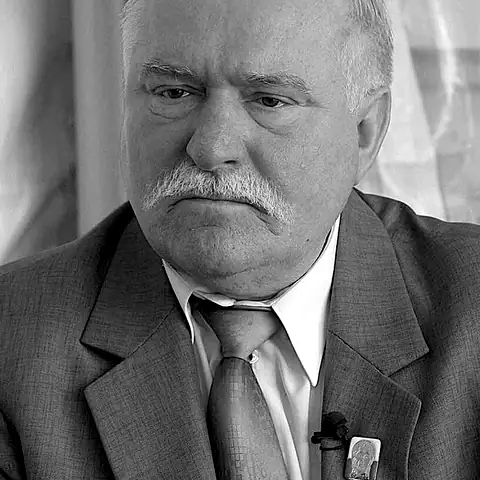
Who is Lech Wałęsa?
Wałęsa was born in 1943 in Popowo and took a job as a Gdańsk shipyard electrician in 1967. He was active in the strikes of 1970. The yard sacked him in 1976, but he kept organizing for independent unions. In August 1980 he led the strike that produced the Gdańsk Agreement and the Solidarity union. Martial law put him in internment between December 1981 and November 1982. The Nobel Peace Prize followed in 1983. At the 1989 Round Table talks he led the opposition side. Voters chose him as president in December 1990, and Aleksander Kwaśniewski beat him in 1995. He now runs the Lech Wałęsa Institute and has no public office.
Political views
- The Nobel Committee honored his peaceful struggle for free unions and for human rights in Poland, in its words "non-violent struggle" on their behalf.Source: nobelprize.org
- He has described his Catholicism as something that gives him strength and inspiration.Source: nobelprize.org
- He called for freeing those who were jailed for standing up for union and civil rights.Source: nobelprize.org
- While president, he was in charge as Poland moved to a market economy, which included the Balcerowicz Plan.Source: en.wikipedia.org
- He was a strong supporter of Poland joining NATO and the European Union.Source: walesa.org
- In 2006 he quit Solidarity because the union backed the Law and Justice party.Source: en.wikipedia.org
- He favors globalization and sees great promise in modern technology.Source: walesa.org
Legacy
Supporters in Poland and elsewhere hail Wałęsa for leading a peaceful mass movement that helped bring down communist rule and set off the 1989 revolutions in Central Europe. Critics say he governed in a combative manner and quarreled with former Solidarity allies, so governments changed often. In 2000 he tried again and won only about 1 percent. A long-running accusation says he was a paid agent of the secret police under the name "Bolek". A lustration court found for him in 2000, but documents taken by the Institute of National Remembrance in 2016 reopened the dispute. Wałęsa says the files are forged.
In their own words
“A lesson drawn from such experiences, however, was that we can effectively oppose violence only if we ourselves do not resort to it.”