12axes-testTake the test
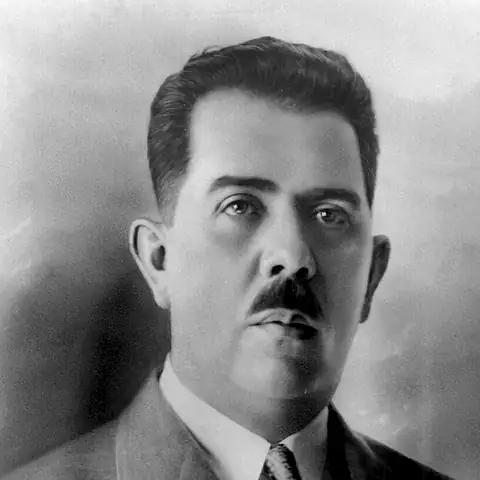
Lázaro Cárdenas
Historical figureMexico1895-1970

Lázaro Cárdenas

President of Mexico (1934-1940) · Governor of Michoacán (1928-1932)

Mexican president who redistributed almost 18 million hectares of land, backed organized labor and expropriated foreign oil companies in 1938, while also tightening the presidency's hold on the ruling party.

Profile on 12 axes11 of 12 documented
ECONOMYSTATESOCIETYWORLDOwnershipMarketsWelfareAuthoritySecurityStructureMoralityReligionTechnologyCultureTradeForeign
Where they stood

Lázaro Cárdenas, axis by axis

  1. PublicPrivate

    He expropriated foreign oil in 1938 and nationalized the railroads, and he put land into communal ejidos. Mexican private business still operated alongside.

  2. PlannedFree
  3. SharedSelf-reliant
  4. DemocraticStrong leader

    He ended Calles's behind-the-scenes rule, yet he also placed the official party under the presidency, so the score is slightly toward a strong executive.

  5. LibertyOrder
  6. LocalCentral
  7. ProgressiveTraditional
  8. SecularReligious

    Education stayed secular with a socialist emphasis, while his relations with the Catholic Church improved. The score is mildly secular.

  9. 09TechnologyNo clear record
    EmbraceCaution
  10. MulticulturalNational identity

    He created a Department of Indian Affairs and sheltered exiles, but his politics centered on Mexican economic nationalism.

  11. GlobalProtected
  12. CooperationStrength

    He gave asylum to Trotsky and Spanish Republicans and later backed Castro, while his oil seizure was a sovereignty move.

One axis has no clear record, so matching leaves it out.

Who was Lázaro Cárdenas?

Lázaro Cárdenas was born in 1895 in Jiquilpán, Michoacán, and left school after the fourth grade. He joined the revolutionary forces in 1913, became a brigadier general by 1924 and served as governor of Michoacán from 1928 to 1932. Plutarco Elías Calles backed him for the presidency in 1934, expecting to control him, but Cárdenas sent Calles into exile after a dispute over labor policy. He governed from 1934 to 1940, later served as defense secretary in 1943, and stayed an influential elder statesman until his death in Mexico City in 1970.

Political views

  • He distributed almost 18 million hectares of land in six years, more than all his predecessors combined, largely through communal ejidos that reached about two-thirds of the peasantry.Source: countrystudies.us
  • He supported Vicente Lombardo Toledano, a Marxist, in reorganizing labor into the CTM, which pushed for better working conditions and minimum wages.Source: countrystudies.us
  • In March 1938 he seized all foreign oil operations after the companies refused to share technical and managerial expertise with Mexicans. Compensation was based on undervalued property records.Source: countrystudies.us
  • He nationalized the railroads and placed them under government control.Source: encyclopedia.com
  • He renamed the ruling party the Party of the Mexican Revolution and organized it into labor, agrarian, military and popular sectors.Source: countrystudies.us
  • Public schooling stayed secular but took on a socialist emphasis, and relations with the Catholic Church improved during his term.Source: countrystudies.us
  • Mexico under Cárdenas admitted political exiles, including Leon Trotsky and many Spanish Republican refugees.Source: encyclopedia.com
  • In 1940 he backed the moderately conservative Manuel Ávila Camacho as his successor.Source: encyclopedia.com

Legacy

Admirers credit Cárdenas with the largest land redistribution in Mexican history, with winning national control of oil and with giving peasants and workers a seat in national politics. One biography calls the 1938 expropriation Mexico's declaration of economic independence. Critics point to the costs: capital flight, a temporary break in trade with the United States, compensation set on undervalued records, nearly twenty years of struggle at the new state oil company Pemex, and a setback in farm output after redistribution. Historians also note that he put the official party under the president, and the state became the final arbiter of disputes.

How close are you to Lázaro Cárdenas?

Take the 12 Axes test and see which historical figure is your political twin, axis by axis.

Take the test

Lázaro Cárdenas: questions

Why did Cárdenas nationalize Mexican oil?

In March 1938 he seized foreign oil operations after the companies refused to share technical and managerial expertise with Mexicans. Mexico and the United States settled the dispute in 1941.

Was Lázaro Cárdenas a socialist?

He backed a Marxist labor leader, collective ejidos and socialist-flavored schooling, but he worked inside a mixed economy and a party he put under the presidency. Historians usually call him a left-nationalist reformer.

Did Cárdenas shelter Trotsky?

Yes. Mexico under Cárdenas admitted political exiles including Leon Trotsky and many Spanish Republican refugees.

Sources

Portrait: Lazaro cardenas2.jpg by Aurelio Escobar Castellanos, CC BY 2.5, via Wikimedia Commons. Cropped and converted to grayscale by 12axes-test.com.