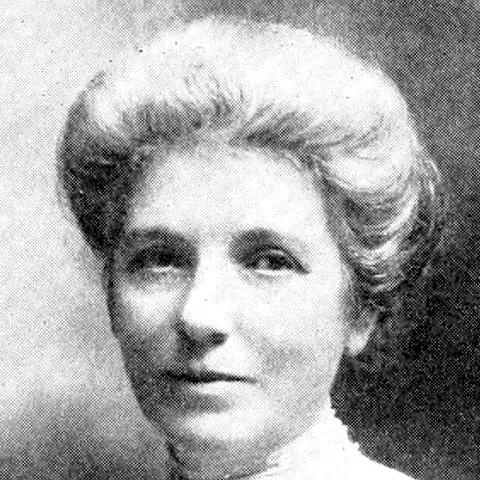
Who was Kate Sheppard?
Kate Sheppard was born Catherine Wilson Malcolm in Liverpool in March 1847 and moved to Christchurch in the late 1860s. She married Walter Sheppard in 1871. Her church work led her to the Woman's Christian Temperance Union, where she became National Superintendent for the Franchise and Legislation in 1887. She wrote the pamphlet Ten Reasons Why the Women of New Zealand Should Vote and organized three petitions to Parliament. The third, in 1893, carried 31,872 signatures. She became the first president of the National Council of Women in 1896, spent time in England, and died in Christchurch in 1934.
Political views
- The WCTU came to see that votes for women would help it ban alcohol and improve the welfare of women and children.Source: canterburymuseum.com
- Her late-1880s petitions to stop women working as barmaids were rejected, which convinced her that women needed the vote to be heard.Source: humanprogress.org
- Her 1888 pamphlet Ten Reasons Why the Women of New Zealand Should Vote was sent to every member of the House of Representatives.Source: canterburymuseum.com
- The suffrage petitions grew from 10,085 signatures in 1891 to 20,274 in 1892 and 31,872 in 1893, the largest the New Zealand parliament had received.Source: humanprogress.org
- The Electoral Bill of 1893 was signed into law on 19 September 1893, and women over 21 could vote.Source: canterburymuseum.com
- As president of the National Council of Women she backed equal wages, equal divorce rights, better health care and contraception.Source: peelingbackhistory.co.nz
- Her Christian socialist values were shaped by her uncle, a Free Church of Scotland minister in Nairn.Source: humanprogress.org
- She edited the WCTU monthly The White Ribbon and spoke in Canada, the United States and England to spread the case for votes for women.Source: humanprogress.org
Legacy
Admirers credit Sheppard with leading the campaign that made New Zealand the first self-governing country to give women the vote, and with inspiring later movements in Australia, Finland, Norway, Denmark and elsewhere. About 65 percent of women voted in the first election, and she appears on the ten-dollar note. Opponents argued that they feared families would be abandoned and the economy harmed, and the upper house twice rejected a suffrage amendment. Her campaign was also tied to temperance and its aim of banning alcohol, a goal critics saw as a limit on personal choice.