12axes-testTake the test
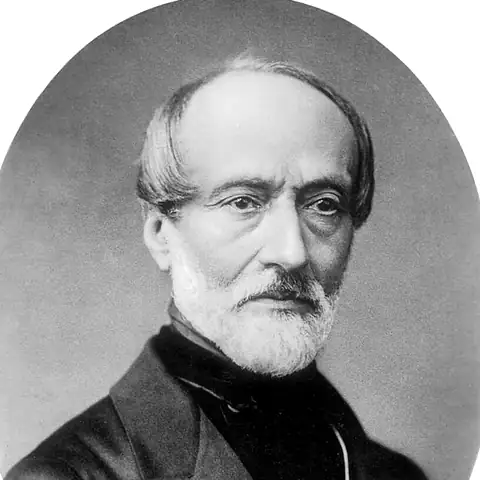
Giuseppe Mazzini
Historical figureItaly1805-1872

Giuseppe Mazzini

Founder of Young Italy · Triumvir of the Roman Republic (1849)

Italian republican who founded Young Italy and led the Roman Republic of 1849. He combined democratic nationalism with a religious creed of duty and a vision of a united, free Europe.

Profile on 12 axes7 of 12 documented
ECONOMYSTATESOCIETYWORLDOwnershipMarketsWelfareAuthoritySecurityStructureMoralityReligionTechnologyCultureTradeForeign
Where they stood

Giuseppe Mazzini, axis by axis

  1. PublicPrivate

    He rejected socialism and the Paris Commune and urged cooperation between labor and capital, yet the Roman Republic he led seized church lands for peasants. Near the middle.

  2. PlannedFree
  3. SharedSelf-reliant

    He backed worker-aid associations and public works, stressing duties over rights. Mildly toward shared provision.

  4. DemocraticStrong leader
  5. 05SecurityNo clear record
    LibertyOrder
  6. 06StructureNo clear record
    LocalCentral
  7. ProgressiveTraditional

    His belief in equality extended to women, which won him support among women's rights advocates. Mildly progressive.

  8. SecularReligious

    His creed was God and the People, and his faith bordered on mysticism, but he rejected papal authority and the temporal power of the pope. Mildly religious.

  9. 09TechnologyNo clear record
    EmbraceCaution
  10. 10CultureNo clear record
    MulticulturalNational identity
  11. 11TradeNo clear record
    GlobalProtected
  12. CooperationStrength

    He wanted a brotherhood of free nations and a federation of European states, with Italy in the vanguard. Strongly toward cooperation.

5 axes have no clear record, so matching leaves them out.

Who was Giuseppe Mazzini?

Giuseppe Mazzini was born in Genoa in 1805 and qualified in law in 1827. After joining the Carbonari in 1830 he was arrested and chose exile, and in 1831 he founded Young Italy to win a unified republic by revolution. He later founded Young Europe and was sentenced to death in absentia in 1833. In London from 1837, he returned in 1848 and became one of three triumvirs of the Roman Republic in 1849, which fell to a French army. When Italy became a monarchy he refused to take a seat in parliament. He died in Pisa on 10 March 1872.

Political views

  • Founded Young Italy in 1831 to pursue a republic, democracy and social justice for a unified Italy, its banner reading Liberty, Equality, Humanity, Unity.Source: encyclopedia.com
  • Held that the country is not an aggregation but an association, and that universal franchise, education and labor are the pillars of a nation.Source: history.hanover.edu
  • Taught that duties come before rights, and that duty to humanity comes before duty to the nation. Nations are God's design.Source: history.hanover.edu
  • Rejected monarchy in any form and refused a parliamentary seat in 1865 rather than swear allegiance to the king.Source: encyclopedia.com
  • Rejected socialism and class struggle, urging workers to keep their duties in view and stay loyal to a republican Italy.Source: encyclopedia.com
  • Envisioned a brotherhood of nations, starting with a federation of European states, and founded Young Europe to link national movements.Source: ebsco.com
  • Held that equality extended to women, and rejected papal authority over the Papal States and over Christendom.Source: ebsco.com

Legacy

Admirers regard Mazzini as the moral prophet of the Risorgimento who gave Italian unity a democratic, republican and European meaning, and Indian and Chinese nationalists later invoked him. Italy honored him with national mourning after his death. Critics say his insurrections in the 1830s and 1850s failed, his idea of the people was an intellectual's romantic notion, and he had few contacts with working-class Italians. His writings were considered vague by some. He lived to see a monarchy, not the republic he wanted, and Austria branded him a terrorist.

How close are you to Giuseppe Mazzini?

Take the 12 Axes test and see which historical figure is your political twin, axis by axis.

Take the test

Giuseppe Mazzini: questions

What was Young Italy?

A secret society Mazzini founded in 1831 to win a unified, republican Italy. It distributed a newspaper and set up affiliated societies, but its 1830s uprisings failed.

Was Mazzini a socialist?

No. He sympathized with workers but rejected socialism and class struggle, preferring cooperation between labor and capital and worker-aid associations.

What did Mazzini mean by God and the People?

It was his motto for a religiously grounded republicanism: the people rule, under duties to God and humanity, and not under kings or popes.

Sources