12axes-testTake the test
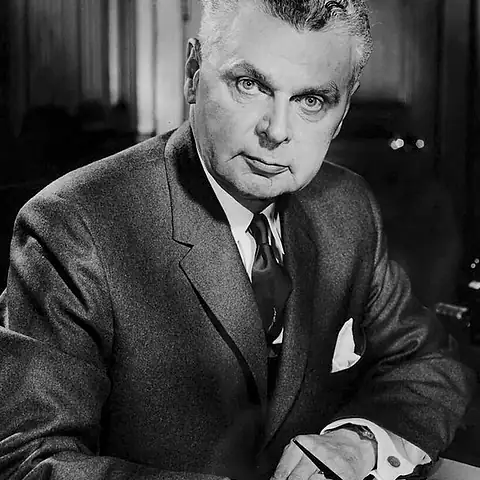
John Diefenbaker
Historical figureCanada1895-1979

John Diefenbaker

13th Prime Minister of Canada (1957-1963) · Leader of the Progressive Conservative Party (1956-1967)

A Saskatchewan lawyer who led the Progressive Conservatives to power, passed the Bill of Rights, gave First Nations people the federal vote, and spoke up against apartheid and for 'One Canada'.

Profile on 12 axes10 of 12 documented
ECONOMYSTATESOCIETYWORLDOwnershipMarketsWelfareAuthoritySecurityStructureMoralityReligionTechnologyCultureTradeForeign
Where they stood

John Diefenbaker, axis by axis

  1. PublicPrivate
  2. PlannedFree

    He was a prairie populist who liked farm price supports and public development schemes, but he led the business-minded Conservatives. The score sits near the middle.

  3. SharedSelf-reliant
  4. DemocraticStrong leader
  5. LibertyOrder

    His great cause was a Bill of Rights in law, but he kept the death penalty and limited it to planned murder. The score leans slightly to liberty.

  6. LocalCentral
  7. ProgressiveTraditional
  8. 08ReligionNo clear record
    SecularReligious

    He was a Baptist, but no religious policy agenda is on record, so this is left blank.

  9. 09TechnologyNo clear record
    EmbraceCaution

    There is no steady record of a position on technology rules, so this is left blank.

  10. MulticulturalNational identity

    He backed 'one Canada' with 'unhyphenated' citizenship and removed racial bias from immigration rules in 1962. He also rejected the idea of 'two nations' and opposed the Maple Leaf flag because he wanted British symbols kept. So he leans toward a single national identity.

  11. GlobalProtected

    He vowed to shift part of Canada's trade, 15 per cent, from the US to Britain. That is an economic nationalist stance. The score leans toward protection.

  12. CooperationStrength

2 axes have no clear record, so matching leaves them out.

Who was John Diefenbaker?

John Diefenbaker was born in 1895 in Neustadt, Ontario, and grew up on the Saskatchewan prairies. He served in World War I, then built a name as a criminal defence lawyer in Prince Albert. Voters sent him to Ottawa in 1940, and the party chose him as leader in 1956. The next year the Liberals lost power after 22 years. In 1958 he took the biggest majority, measured in share of seats, that any federal government in Canada has won. A split over nuclear weapons brought the government down in 1963. He stayed in the Commons as an MP until he died in 1979.

Political views

  • He wanted an 'unhyphenated nation' where people of every origin and religion were treated the same.Source: en.wikipedia.org
  • Beginning in 1946 he argued for a written bill of rights covering worship, speech and association. The Canadian Bill of Rights became law in 1960.Source: biographi.ca
  • His government gave First Nations and Inuit people the federal vote, and he put Ellen Fairclough in cabinet as the first woman there.Source: laws-lois.justice.gc.ca
  • He strongly rejected apartheid, and his stand helped lead to South Africa leaving the Commonwealth in 1961.Source: en.wikipedia.org
  • He pledged that 15 per cent of Canada's trade would shift from American to British partners.Source: biographi.ca
  • He agreed to base American Bomarc missiles in Canada, then wavered on fitting them with nuclear warheads and was slow to act in the Cuban missile crisis.Source: biographi.ca
  • In 1964 he led the fight against the Maple Leaf flag, saying it lacked historic symbols.Source: biographi.ca

Legacy

Admirers see a champion of ordinary citizens and minority rights. They say his Bill of Rights pointed toward the 1982 Charter. They also note that Indigenous people got the federal vote under him, that he named the first woman in cabinet and the first Indigenous senator, and that he opposed apartheid. His populist style also broke Liberal control of the West. Critics point to indecision, to the 1959 end of the Avro Arrow fighter, after which Avro let go 14,000 workers, and to a muddled approach to nuclear arms and to President Kennedy that split his cabinet and ended his government. His fight against the new flag and against two-nation ideas also pushed many Quebecers away.

How close are you to John Diefenbaker?

Take the 12 Axes test and see which historical figure is your political twin, axis by axis.

Take the test

John Diefenbaker: questions

Was John Diefenbaker a conservative?

Yes. He led the Progressive Conservative Party for eleven years and was prime minister for six. He was a populist conservative who backed farmers and small-town Canadians and still supported public programs.

What did Diefenbaker do for civil rights?

The Canadian Bill of Rights became law in 1960 under him, and First Nations and Inuit people gained the federal vote. In 1962 his government also took racial bias out of immigration rules.

Why did Diefenbaker's government fall?

His cabinet split in 1963 over whether to arm Canada's missiles with nuclear warheads. The dispute, along with unease over how he handled relations with the U.S., led to defeat.

Sources