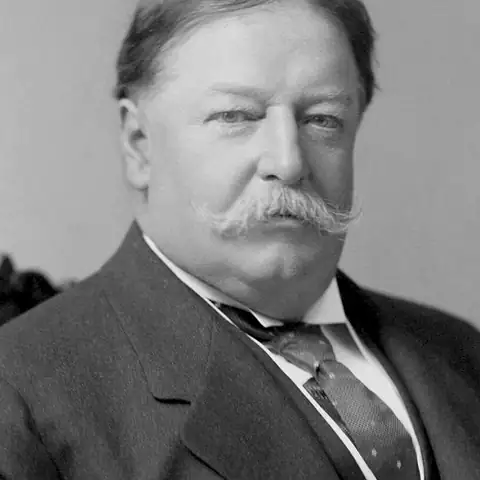
Who was William Howard Taft?
William Howard Taft came from a well-known Cincinnati family. His jobs included judge, solicitor general, secretary of war under Theodore Roosevelt, and head of the Philippines, where he was the first civilian governor-general. Roosevelt picked him as heir, and Taft won the 1908 election. As president he pressed antitrust suits, supported the income tax amendment and tightened railroad oversight. But he accepted a high tariff and fired the chief forester, Gifford Pinchot, and that turned progressives against him. In 1912 Roosevelt ran against him, the Republican vote split, and Woodrow Wilson won. Warren Harding named Taft chief justice in 1921. It was the job he had long wanted, and he held it until 1930.
Political views
- Pressed for the Sixteenth Amendment, which let Congress tax incomes.Source: millercenter.org
- Took the sugar trust and U.S. Steel to court under antitrust law. This upset Roosevelt, who had approved the steel merger.Source: millercenter.org
- Signed the Mann-Elkins Act in 1910, which gave the Interstate Commerce Commission power to suspend increases in railroad rates.Source: millercenter.org
- Signed the Payne-Aldrich Tariff, which trimmed rates only slightly, and described it as the party's best tariff bill.Source: millercenter.org
- Called for a free trade agreement with Canada in 1910. He also negotiated arbitration treaties with Britain and France, but the Senate weakened them.Source: en.wikipedia.org
- Practised dollar diplomacy, using American investment to extend influence in Latin America, and in 1912 he sent 2,700 marines to Nicaragua.Source: millercenter.org
Legacy
Historians often see Taft as a skilled administrator and judge who did not suit the political side of the presidency. Admirers point to his antitrust cases, the income tax amendment, rail regulation and a reorganised executive branch. They also praise his long term as chief justice, when he updated the federal courts. In his own day, progressives led by Roosevelt said he sided with business over the tariff and conservation, and the quarrel helped put Wilson in the White House. Critics in Latin America and in the United States called dollar diplomacy and the Nicaragua landing economic imperialism. His earlier years in the Philippines also tie him to the colonial government that followed the Philippine-American War.