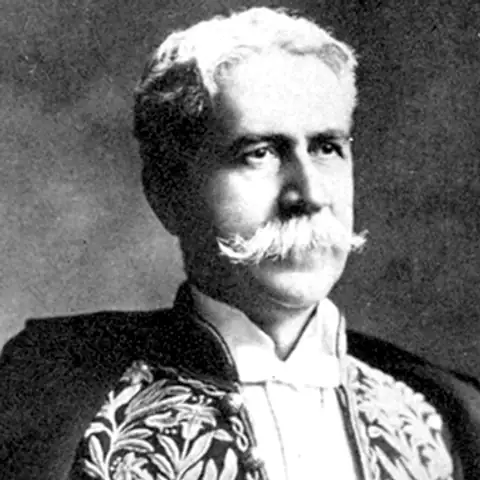
Who was Joaquim Nabuco?
Joaquim Nabuco was born in Recife in 1849, the son of a senator of the Empire. In 1878 he was elected to the Chamber of Deputies as a member for Pernambuco. In parliament he became the loudest voice of the anti-slavery cause and led the Brazilian Anti-Slavery Society. He wrote O Abolicionismo (1883) while living in London. Slavery ended with the Golden Law of 1888, and he then argued for turning the monarchy into a federation. The republic of 1889 pushed him out of public life for about ten years. Afterwards he argued Brazil's case in a border dispute with British Guiana and was Brazil's minister in London, then its first ambassador in Washington.
Political views
- He held that ending slavery must come first, ahead of every other reform, because the whole Brazilian economy and society rested on it.Source: pt.wikisource.org
- He wanted abolition to be won by law in parliament, not by street protest or revolt.Source: cpdoc.fgv.br
- Once slavery ended, he introduced a bill for a federal monarchy. He thought federation might give the empire a fresh start.Source: pt.wikisource.org
- In the Chamber, as a Liberal, he called for direct elections and for non-Catholics to be allowed to hold office.Source: cpdoc.fgv.br
- He set out further reforms: more power for the provinces, equality between religions, public schooling and European immigration.Source: cpdoc.fgv.br
- As ambassador he promoted Pan-Americanism and friendship with the United States, and saw the Monroe Doctrine as protection against European powers.Source: cpdoc.fgv.br
Legacy
Many see Nabuco as one of the most important abolitionists in the Americas. Readers still turn to his study of how slavery shaped Brazil's institutions. Admirers praise his speeches, his moral case against slavery and a diplomatic career that shaped Pan-American ties. Critics say his cautious, elite-led approach left too little room for Black abolitionists and popular movements. They add that his backing for European immigration shared the racial thinking of his day, and that his later warmth toward the United States overlooked its own regional ambitions. A research foundation in Recife carries his name. In his memoir Minha Formação (1900) he describes how he went from young reformer to diplomat.
In their own words
“Slavery, although hereditary, is a true mark of Cain that Brazil bears on its brow.”