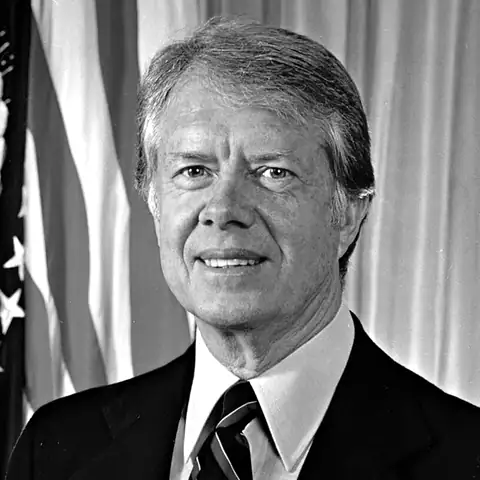
Who was Jimmy Carter?
Jimmy Carter grew up in Plains, Georgia. He served as a naval officer in the nuclear submarine programme, farmed peanuts and taught Sunday school as a Baptist deacon. He sat in the state senate and then became governor of Georgia. After Watergate he ran as an outsider and won the White House in 1976. His years in office brought high inflation, fuel shortages and the Iran hostage crisis, and he lost to Ronald Reagan in 1980. Later he ran the Carter Center, which worked on elections, disease and the settling of conflicts. The Nobel Peace Prize came to him in 2002. He died in 2024, aged 100.
Political views
- Freed up the airline, trucking and rail industries, which in time cut the cost of moving goods and people.Source: millercenter.org
- Founded the Department of Energy and funded work on wind, solar and similar sources.Source: millercenter.org
- Early on, he pardoned those who dodged the Vietnam draft and cancelled the B-1 bomber.Source: millercenter.org
- Put universal human rights at the heart of American foreign policy and preferred to use force sparingly.Source: millercenter.org
- Brought Egypt and Israel together at Camp David and signed treaties handing the Panama Canal to Panama.Source: millercenter.org
- Opened full diplomatic ties with Communist China, and agreed the SALT II arms limits with Moscow.Source: millercenter.org
- Answered the Soviets' 1979 move into Afghanistan by halting grain exports and staying away from the 1980 Moscow Games.Source: millercenter.org
Legacy
Admirers point to the Egypt-Israel peace, the human rights focus in foreign policy, early backing for clean energy, looser transport rules and a post-presidency so busy that it earned a Nobel. Critics, among them many conservatives and some fellow Democrats, say his years were weak on inflation, fuel shortages and dealing with Congress. They say the hostage crisis and Afghanistan showed foreign policy that lacked force. Some historians have since judged him more kindly, noting how long the effects of deregulation and his human rights agenda have lasted.
In their own words
“It is a crisis of confidence. It is a crisis that strikes at the very heart and soul and spirit of our national will.”