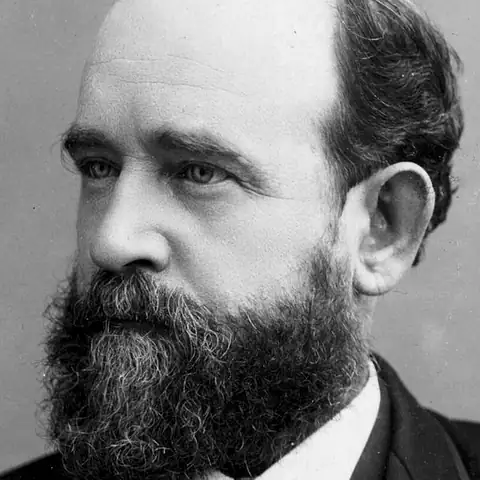
Who was Henry George?
Henry George, born in Philadelphia, left school early, went to sea and later worked as a printer and newspaper writer in California. He rose to run a San Francisco paper. He was struck that land prices climbed while poverty stayed, and he explained why in Progress and Poverty, published in 1879. It sold widely and attacked the accepted ideas about property and laissez-faire. George settled in New York and stood for mayor in 1886 for the United Labor Party, coming second. He ran again in 1897 but died of a stroke four days before the vote.
Political views
- He wanted one tax, on the bare value of land, to pay for government in place of taxes on work and capital.Source: econlib.org
- In his view the root of unequal wealth was that private owners kept the rent from land.Source: gutenberg.org
- He championed free trade and attacked tariffs in his 1886 book Protection or Free Trade.Source: econlib.org
- He thought natural monopolies and public utilities should be publicly owned and paid for from land rent.Source: en.wikipedia.org
- He promoted the secret ballot, and reformers who got it adopted in several states pointed to his influence.Source: en.wikipedia.org
- In an 1869 essay he argued for stopping Chinese immigration to California.Source: en.wikipedia.org
- He said 'protection' was a misleading label for trade barriers, because tariffs hurt the workers they claim to help.Source: econlib.org
Legacy
George's thinking, called Georgism, fed a movement in the United States, campaigns for land value taxes, parties in other countries and the economic plans of Sun Yat-sen. Even Milton Friedman called a tax on unimproved land the least bad tax. Critics reply that land values depend on improvements nearby, so the tax is less neutral than George claimed. They add that taxing the full value of minerals and other resources would discourage production. Owners of land saw his plan as an attack on property rights. Admirers see it as a fair way to share wealth that no individual earned.
In their own words
“We must make land common property.”