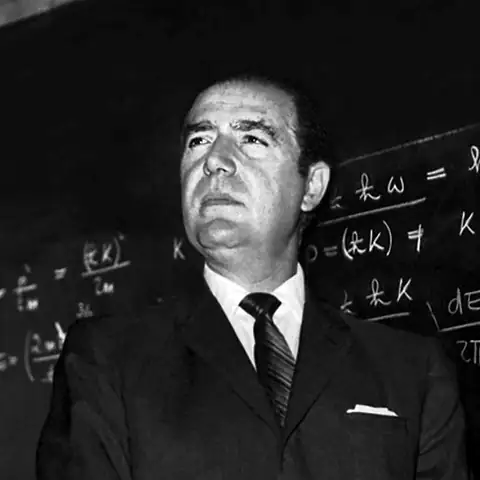
Who was Fernando Belaúnde Terry?
Fernando Belaúnde Terry was an architect from Lima who founded the party Acción Popular in 1956. He won the presidency in 1963 and governed until a military coup removed him in 1968. After twelve years of military rule he was elected again in 1980 and finished his term in 1985, only the second time in forty years that an elected Peruvian president had done so. He died in Lima in 2002. Norwegian reference works describe him as a social democratic politician, though his second government turned toward market liberalization.
Political views
- He founded Acción Popular in 1956 and won the 1963 presidential election under its banner.Source: snl.no
- In his first term he spent heavily on health and education, while an opposition coalition in Congress rejected several proposals and withheld tax funds.Source: snl.no
- He financed his projects with unfavorable loans from European banks, and rising inflation fed social unrest before the 1968 coup.Source: snl.no
- After 1980 his government adopted a neoliberal program centered on privatization and export-led growth, and it sharply cut food subsidies.Source: countrystudies.us
- His government cut import barriers and passed financial reforms meant to support private markets, reversing the state-led model of the Velasco era.Source: countrystudies.us
- Facing Shining Path, he first ignored the group, then used police, and eventually turned to the army, preferring military answers over socioeconomic measures.Source: countrystudies.us
- He completed his elected term in 1985 and handed power to Alan García of the APRA party.Source: countrystudies.us
Legacy
Admirers credit Belaúnde with restoring civilian rule in 1980 and with completing his term in a country where coups were common. His first government invested in health and education. Critics point to economic damage: inflation rose from 59 percent in 1980 to 163 percent in 1985, output fell 12 percent and real wages 20 percent by 1983, and foreign debt rose from 9.6 billion to 13 billion dollars. Counterinsurgency was often applied indiscriminately and caused severe human rights violations, and more than 6,000 people had died by 1985. Acción Popular won only 6 percent of the vote that year.