12axes-testTake the test
Felipe González
Retired figureSpainBorn 1942

Felipe González

Prime Minister of Spain (1982-1996) · Secretary General of the PSOE (1974-1997)

Spain's Socialist prime minister for thirteen years. He moved the PSOE away from Marxism, took Spain into the European Community and kept it in NATO, and built universal health care.

Profile on 12 axes8 of 12 documented
ECONOMYSTATESOCIETYWORLDOwnershipMarketsWelfareAuthoritySecurityStructureMoralityReligionTechnologyCultureTradeForeign
Where they stand

Felipe González, axis by axis

  1. PublicPrivate

    His government privatized some firms and seized the Rumasa holding in 1983, while it kept and widened public health and schooling. Near neutral.

  2. PlannedFree

    He pursued painful restructuring of steel and shipbuilding and pro-market steps, which pulled the PSOE away from its Marxist past.

  3. SharedSelf-reliant
  4. DemocraticStrong leader

    He governed through free elections and lost his majority in 1993, then left office after defeat in 1996. He also faced scandals over corruption and the GAL. Mildly democratic.

  5. LibertyOrder

    The GAL death squads operated from 1983 to 1987 and were tied by courts to the police and Interior Ministry funds. The score reflects that record, with his personal responsibility left out of the number.

  6. LocalCentral

    He pledged to approve the statutes of the pending autonomous communities, which leans toward devolution.

  7. 07MoralityNo clear record
    ProgressiveTraditional
  8. 08ReligionNo clear record
    SecularReligious
  9. 09TechnologyNo clear record
    EmbraceCaution
  10. 10CultureNo clear record
    MulticulturalNational identity
  11. GlobalProtected

    Spain's entry to the European Economic Community in 1986 opened the economy. Leans toward global trade.

  12. CooperationStrength

    After opposing NATO from opposition he campaigned to stay in and joined the European Community in 1986. Leans toward cooperation.

4 axes have no clear record, so matching leaves them out.

Who is Felipe González?

Felipe González joined the underground Socialist Youths in Seville in 1962 and the PSOE in 1964. He became its secretary general in 1974. At a 1979 congress the party dropped Marxism, and in October 1982 it won a landslide. He took office as prime minister on 2 December 1982 and governed until May 1996. His governments carried out industrial restructuring, expanded schooling and health care, and took Spain into the European Community on 1 January 1986. After the 1993 election he lost his majority. He gave up the party leadership in 1997 and left parliament in 2004. He is a co-founder of the Club de Madrid.

Political views

  • Joined the PSOE in 1964, became its secretary general in 1974, and led the party's 1979 turn away from Marxism toward social democracy.Source: cidob.org
  • Signed the Pactos de La Moncloa in 1977 and, in 1982, promised steady economic planning agreed with society rather than imposed, along with 800,000 new jobs.Source: lamoncloa.gob.es
  • Restructured steel and shipbuilding at the cost of many jobs, privatized some firms and seized the Rumasa holding in 1983.Source: cidob.org
  • The 1986 General Health Law created universal public health care, and a 1990 law extended free public education to age 16.Source: cidob.org
  • Opposed NATO membership from opposition, then campaigned to stay in. The March 1986 referendum passed with 52.5 percent, and he later called calling it his biggest error.Source: cidob.org
  • Took Spain into the European Economic Community on 1 January 1986.Source: cidob.org
  • Pledged in 1982 to approve the statutes of four pending autonomous communities and reform local government.Source: lamoncloa.gob.es
  • Was in power while the GAL death squads killed 27 people between 1983 and 1987. Courts tied them to the police and to Interior Ministry reserve funds.Source: cidob.org

Legacy

Admirers credit González with modernizing Spain after Franco: entry to Europe, universal health care, wider schooling and a stable democracy. He later received the Charlemagne Prize. Critics note that industrial restructuring cost many jobs and unemployment stayed high for much of his time in office. Unions held general strikes in 1985, 1988 and 1994. The GAL death squads killed 27 people, some with no link to ETA, and courts tied them to the police and Interior Ministry funds, while corruption cases damaged his last governments. He later called the NATO referendum his biggest error.

How close are you to Felipe González?

Take the 12 Axes test and see which historical figure is your political twin, axis by axis.

Take the test

Felipe González: questions

Was Felipe González a Marxist?

No. At a 1979 congress the PSOE dropped Marxism, and González led the party as a social democratic force. In government he privatized some firms and restructured heavy industry.

What was the GAL scandal?

The GAL were death squads that killed 27 people between 1983 and 1987 in the fight against ETA. Courts tied them to Spanish police and Interior Ministry funds, which damaged González's government.

Is Felipe González still in politics?

He gave up the PSOE leadership in 1997 and left parliament in 2004. He remains a commentator and co-founder of the Club de Madrid, but holds no office and is not a candidate.

Sources

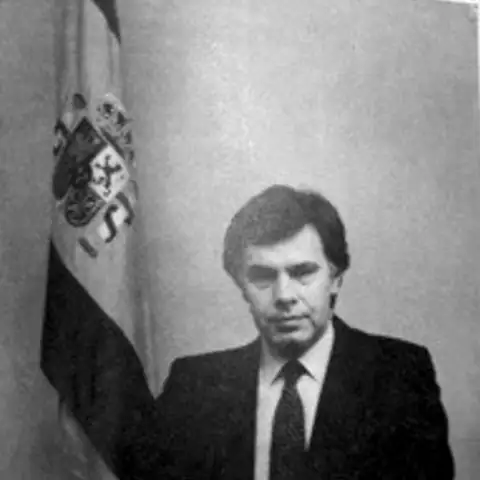
Portrait: Foto felipe.jpg by Malanquilla, CC BY-SA 4.0, via Wikimedia Commons. Cropped and converted to grayscale by 12axes-test.com.