12axes-testTake the test
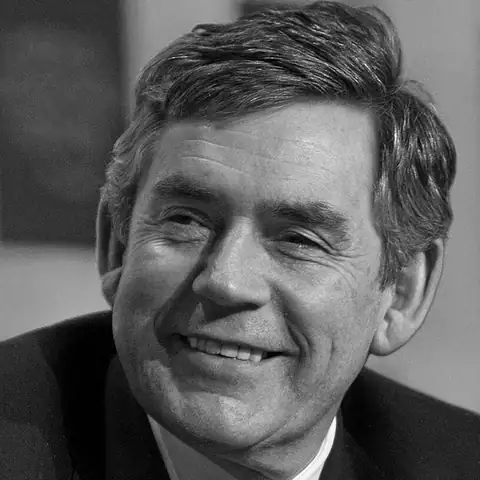
Gordon Brown
Retired figureUnited KingdomBorn 1951

Gordon Brown

Prime Minister of the United Kingdom (2007-2010) · Leader of the Labour Party (2007-2010)

Labour politician who ran the Treasury for ten years, then led Britain through the 2008 financial crash, and who gave the Bank of England control over interest rates.

Profile on 12 axes11 of 12 documented
ECONOMYSTATESOCIETYWORLDOwnershipMarketsWelfareAuthoritySecurityStructureMoralityReligionTechnologyCultureTradeForeign
Where they stand

Gordon Brown, axis by axis

  1. PublicPrivate

    When the crisis hit in 2008 he took majority stakes in Northern Rock and RBS as emergency measures, not as part of a plan to nationalise. He is scored near the middle.

  2. PlannedFree
  3. SharedSelf-reliant

    His tax credits, extra public spending and overseas aid push the score toward redistribution.

  4. DemocraticStrong leader
  5. LibertyOrder

    In 2008 he supported letting police hold terror suspects for 42 days before charge, which pushes the score toward order.

  6. LocalCentral
  7. ProgressiveTraditional
  8. SecularReligious
  9. 09TechnologyNo clear record
    EmbraceCaution
  10. MulticulturalNational identity

    He talked up Britishness and, in 2007, promised British jobs for British workers, but he ran an open immigration system. The score is mildly national.

  11. GlobalProtected
  12. CooperationStrength

    He drove joint action through the G20 in 2009 and pushed debt relief and aid, though he kept backing the Iraq War. The score leans toward cooperation.

One axis has no clear record, so matching leaves it out.

Who is Gordon Brown?

Gordon Brown grew up in Kirkcaldy, Scotland, the son of a Church of Scotland minister. He was born in 1951 in Giffnock, near Glasgow. He went to Edinburgh University at 16 and graduated with a first in history. Labour sent him to Parliament for Dunfermline East in 1983, where he shared an office with Tony Blair. Brown was Chancellor from 1997 to 2007, the longest stretch in modern times. In that job he handed interest-rate decisions to the Bank of England and laid down five tests for joining the euro. He took over from Blair in June 2007. The crash and the recession shaped his term, and Labour lost its majority in 2010. He stood down as an MP in 2015 and has since held envoy roles instead of elected office.

Political views

  • Handed control of interest rates to an independent Bank of England and helped negotiate writing off debts owed by the poorest nations.Source: gov.uk
  • Laid down five economic tests for joining the euro, and Britain never adopted the currency.Source: en.wikipedia.org
  • Created working tax credits and child tax credits, and gave more help to pensioners.Source: en.wikipedia.org
  • Chaired the 2009 G20 meeting in London, where leaders promised an extra $1.1 trillion to prop up the global economy.Source: gov.uk
  • Was in government when the Climate Change Act 2008 set a legal goal of cutting emissions by 2050.Source: legislation.gov.uk
  • Took part in the 2014 campaign to keep Scotland in the UK, while long favouring devolution.Source: en.wikipedia.org

Legacy

Supporters credit Brown with years of steady growth, an independent central bank, tax credits that cut child poverty, and a leading part in the world's joint response to the 2008 crash. Critics counter that lax rules for banks and growing state spending left the country exposed when trouble came. They also cite the sale of a large share of the national gold stock at low prices and the scrapping of the 10p tax rate. A long feud with Tony Blair coloured his Treasury years. Since leaving office he has campaigned on schooling worldwide, health finance and child poverty.

How close are you to Gordon Brown?

Take the 12 Axes test and see which historical figure is your political twin, axis by axis.

Take the test

Gordon Brown: questions

What party is Gordon Brown in?

Labour. He led it from 2007 to 2010, and he served as a Labour MP for more than three decades before leaving Parliament in 2015.

Why did Britain stay out of the euro under Gordon Brown?

His Treasury set five economic tests that had to be met before Britain could join. It judged that they were not met, so the pound stayed.

Is Gordon Brown a socialist?

He is usually described as centre-left. Supporters and critics note that he worked with markets and an independent central bank while funding tax credits and public services.

Sources

Portrait: Gordon Brown Davos 2008 crop (1).jpg by Gordon_Brown_Davos_2008_crop.jpg : Copyright World Economic Forum (www.weforum.org), swiss-image.ch /Photo by Remy St..., CC BY-SA 2.0, via Wikimedia Commons. Cropped and converted to grayscale by 12axes-test.com.