12axes-testTake the test
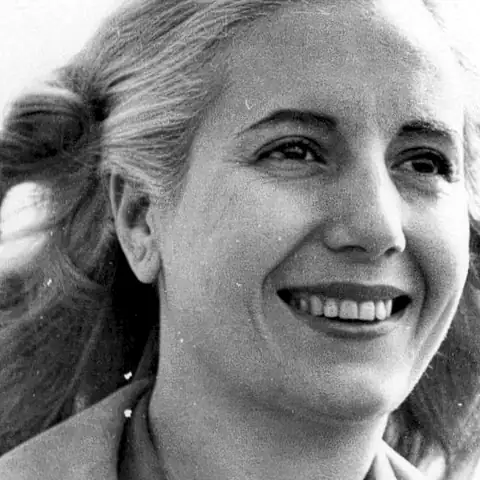
Eva Perón
Historical figureArgentina1919-1952

Eva Perón

First Lady of Argentina (1946-1952) · Head of the Eva Perón Foundation

Wife of President Juan Perón who became Argentina's most powerful woman. She championed votes for women, ran a huge charity foundation and mobilized poor and union Argentines behind Peronism.

Profile on 12 axes6 of 12 documented
ECONOMYSTATESOCIETYWORLDOwnershipMarketsWelfareAuthoritySecurityStructureMoralityReligionTechnologyCultureTradeForeign
Where they stood

Eva Perón, axis by axis

  1. PublicPrivate
  2. PlannedFree
  3. SharedSelf-reliant

    Her Foundation gave out food, clothing and medicine and built hospitals and schools, but as personal charity tied to the Peronist movement rather than as a rights-based welfare state. Strongly toward shared provision.

  4. DemocraticStrong leader

    She held no elected office, yet reportedly had a near veto over key cabinet appointments and picked the head of the main labor confederation. She also backed a vote for women. Moderately toward strong leadership.

  5. LibertyOrder

    Opposition papers were shut and critics jailed or exiled under the Perón government.

  6. LocalCentral
  7. 07MoralityNo clear record
    ProgressiveTraditional
  8. 08ReligionNo clear record
    SecularReligious
  9. 09TechnologyNo clear record
    EmbraceCaution
  10. 10CultureNo clear record
    MulticulturalNational identity
  11. 11TradeNo clear record
    GlobalProtected
  12. 12Foreign policyNo clear record
    CooperationStrength

6 axes have no clear record, so matching leaves them out.

Who was Eva Perón?

Eva Duarte was born in 1919 in Los Toldos and became a radio and film actress in Buenos Aires. She married Juan Perón in 1945 and became First Lady when he won the presidency in 1946. Without holding office she became the second most important figure in the government, speaking for the unions and the poor. She led the women's branch of the Peronist movement, announced the 1947 women's suffrage law and ran a large charitable foundation. In 1951 crowds urged her to run for vice president, but she withdrew after eight days. She died of cancer on 26 July 1952, aged 33.

Political views

  • Led the women's branch of the Peronist movement and campaigned with feminist leaders for the vote. Congress passed the women's suffrage law on 9 September 1947.Source: worldatlas.com
  • Ran a government-subsidized foundation that handed out food, clothing and medicine and built hospitals and schools in poor districts. Critics charged it with corruption.Source: ebsco.com
  • Backed Perón's labor policies, chose the secretary-general of the General Confederation of Labor and headed the radio workers' union in 1945.Source: ebsco.com
  • Was reported to hold a virtual veto over key cabinet appointments, including the Interior Ministry, which controlled the national police.Source: ebsco.com
  • Owned the newspaper Democracia and turned it into a propaganda organ for Perón's government.Source: ebsco.com
  • Accepted calls to run for vice president at a mass Justicialist assembly on 22 August 1951, then withdrew her candidacy on 30 August.Source: filateliaargentina.com.ar

Legacy

Admirers remember Evita as a voice for the poor, a driver of votes for women and a builder of schools and hospitals, and her memory remains a touchstone in Argentine politics. Critics point to the pro-government propaganda she ran, her dictatorial manner toward opponents and the charge that her Foundation was a vehicle for corruption. Opposition newspapers were closed and critics jailed or exiled under the government she served. The poorer Argentines she helped revered her, while the upper and middle classes often saw her as a ruthless social climber, and that split has never fully faded.

How close are you to Eva Perón?

Take the 12 Axes test and see which historical figure is your political twin, axis by axis.

Take the test

Eva Perón: questions

Was Eva Perón a feminist?

She led the women's branch of Peronism and campaigned for the 1947 women's suffrage law, so she is a central figure in Argentine women's political history. Her work was tied to Perón's movement, and she was never an independent party leader.

Did Eva Perón hold political office?

No. She was First Lady and never held an elected post. In August 1951 crowds urged her to run for vice president, and she withdrew a few days later. She died in July 1952.

What was the Eva Perón Foundation?

A government-subsidized charity that distributed food, clothing and medicine and built hospitals and schools in poor districts. Supporters praised its reach, while critics charged corruption.

Sources