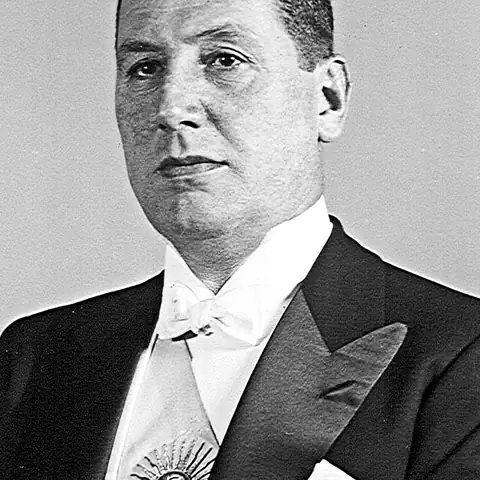
Who was Juan Perón?
Juan Perón was born in 1895 in Lobos, in Buenos Aires province, and spent his early career as an army officer. After officers seized power in 1943, he took charge of the labour office and won the loyalty of the unions. When he was jailed in 1945, huge crowds filled the streets on 17 October and got him freed. He was elected president in 1946 with his wife Eva at his side until her death in 1952. Officers overthrew him in 1955. He lived abroad for 18 years, came back, won the 1973 election and died in office in 1974.
Political views
- Justicialism was his name for his own doctrine. He presented it as a third position, avoiding both capitalist individualism and communist collectivism.Source: backend.educ.ar
- The 1949 constitution drawn up under him said private property had a social function and wealth had to serve the welfare of the people.Source: es.wikisource.org
- Under that constitution, foreign trade came under state control and the state could take over economic activity by law.Source: es.wikisource.org
- His government took the British-owned railways into public hands in 1947 and 1948, and the state played a bigger role in running the economy.Source: falklandsbiographies.org
- He also supported state action over farmland, so that farm families could come to own the land they worked.Source: falklandsbiographies.org
- Women gained the vote during his first term, and he backed the change.Source: es.wikisource.org
- He backed a constitution that let presidents run again, ending the earlier ban on back-to-back terms.Source: es.wikisource.org
- His government turned the Falkland Islands claim into official policy and would not agree to outside arbitration.Source: falklandsbiographies.org
Legacy
His movement is still among the strongest forces in Argentina, and his influence has lasted for decades. Supporters credit him with creating labour courts, giving all workers paid holidays and bringing workers and women into public life. Critics point to limits on the press and the opposition in his first two terms, to the protection he gave Nazi war criminals, and to economic policies they hold responsible for inflation and slow growth. His short third term saw bitter, violent fights between the left and right wings of his own movement. Those fights grew after he died and came before the 1976 coup. Historians still argue whether his early governments were democratic, populist or authoritarian.