12axes-testTake the test
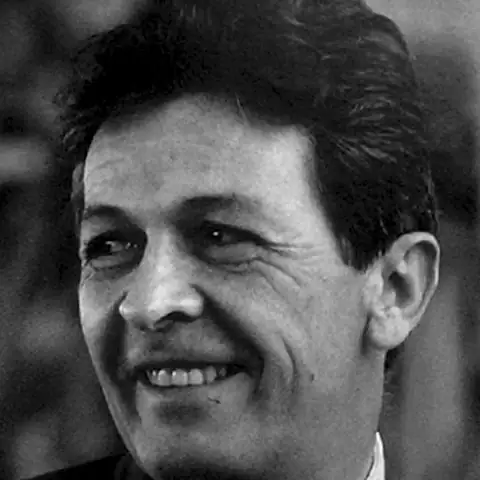
Enrico Berlinguer
Historical figureItaly1922-1984

Enrico Berlinguer

General Secretary of the Italian Communist Party (1972-1984) · Architect of the Historic Compromise

Italian Communist leader who steered his party away from Moscow, promoted a democratic road to socialism and the Historic Compromise with Catholics and Socialists, and drew huge crowds at his 1984 funeral.

Profile on 12 axes6 of 12 documented
ECONOMYSTATESOCIETYWORLDOwnershipMarketsWelfareAuthoritySecurityStructureMoralityReligionTechnologyCultureTradeForeign
Where they stood

Enrico Berlinguer, axis by axis

  1. PublicPrivate

    He spoke of a radical transformation of society, not just correcting the system's flaws, but within a pluralist democracy. This is a judgment call.

  2. PlannedFree

    As above, he sought deep change within democratic rules, and he backed austerity and efficiency in the 1970s crisis. The score is moderate.

  3. SharedSelf-reliant

    His austerity program was framed around social justice, and his party stood for a strong public sector.

  4. DemocraticStrong leader

    He called democracy the core of the Italian road to socialism and condemned the Soviet invasion of Czechoslovakia.

  5. LibertyOrder

    He refused to negotiate with the kidnappers of Aldo Moro in 1978 and his party backed a national unity government in the years of terrorism, so the score leans to order.

  6. 06StructureNo clear record
    LocalCentral
  7. 07MoralityNo clear record
    ProgressiveTraditional
  8. 08ReligionNo clear record
    SecularReligious
  9. 09TechnologyNo clear record
    EmbraceCaution
  10. 10CultureNo clear record
    MulticulturalNational identity
  11. 11TradeNo clear record
    GlobalProtected
  12. CooperationStrength

    He accepted NATO membership in 1976, built Eurocommunism with the French and Spanish parties and called for a new world order of peace and independence for all peoples.

6 axes have no clear record, so matching leaves them out.

Who was Enrico Berlinguer?

Enrico Berlinguer was born in Sassari on 25 May 1922 and joined the Italian Communist Party in 1943. He led its youth federation from 1949 to 1956 and became national secretary in 1972. In 1969 he condemned the Soviet invasion of Czechoslovakia and argued for an Italian path to socialism. He launched the Historic Compromise in 1973, a proposed cooperation among the Communists, Socialists and Catholics, and with the French and Spanish parties he built Eurocommunism. He died on 11 June 1984 after a cerebral hemorrhage during a meeting for the European elections. Huge crowds attended his funeral two days later.

Political views

  • In 1969 he condemned the Soviet invasion of Czechoslovakia and promoted an Italian path to socialism distinct from Moscow.Source: encyclopedia.com
  • In 1973 he proposed the Historic Compromise, a cooperation among socialist, communist and Catholic forces, and he sought a larger role for his party in government.Source: encyclopedia.com
  • From 1975 he developed Eurocommunism with the French and Spanish Communist parties, and in 1977 he met their leaders Marchais and Carrillo.Source: encyclopedia.com
  • In June 1976 he recognized NATO and said he felt safer on the Western side.Source: encyclopedia.com
  • He presented democracy as the defining feature of the democratic road to socialism and held that working-class leadership should be realized in a pluralist, democratic political system.Source: books.openedition.org
  • He promoted a policy of austerity, efficiency and social justice in response to the economic crisis and terrorism of the 1970s.Source: encyclopedia.com
  • After the kidnapping of Aldo Moro in 1978 he refused to negotiate with the kidnappers, while his party supported the national unity government led by Giulio Andreotti.Source: encyclopedia.com
  • In 1980 he made the moral question a precondition for renewing Italian politics, and in 1981 he said the original thrust of the October Revolution had exhausted itself.Source: encyclopedia.com

Legacy

Admirers see Berlinguer as the Communist leader who tied his party firmly to democracy, defended Italian independence from Moscow and called for honest politics, which the crowds at his funeral reflected. The Historic Compromise never brought the party into government. After Moro's murder he judged further cooperation with the Christian Democrats fruitless, and the party lost ground in the 1979 elections. Critics also note that, despite his autonomy from Moscow, he kept treating 1917 as the decisive turning point of the modern era.

How close are you to Enrico Berlinguer?

Take the 12 Axes test and see which historical figure is your political twin, axis by axis.

Take the test

Enrico Berlinguer: questions

What was the Historic Compromise?

It was Berlinguer's 1973 proposal for cooperation among Italy's socialist, communist and Catholic political forces. It led to the Communists backing Giulio Andreotti's national unity government in 1978.

Did Berlinguer break with the Soviet Union?

He condemned the 1969 invasion of Czechoslovakia, backed an Italian path to socialism, and in 1981 said the October Revolution's original thrust had exhausted itself. He still treated 1917 as a turning point.

What is Eurocommunism?

It was the strategy Berlinguer began in 1975 with the French and Spanish Communist parties, which stressed a democratic road to socialism and independence from Moscow.

Sources