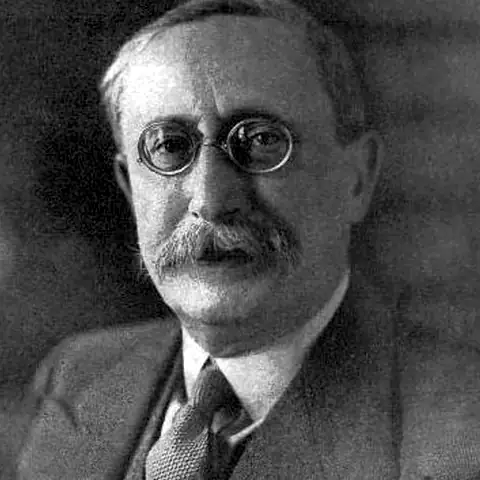
Who was Léon Blum?
Léon Blum was born in 1872 into a liberal Jewish family and trained in law, joining the Council of State in 1895. He also worked as a literary and drama critic. Drawn into politics by the Dreyfus affair, he joined Jean Jaurès's party and helped found the SFIO in 1905. He was elected deputy in 1919 and rebuilt the Socialists after the party split in 1920. He became premier on 4 June 1936 and resigned in June 1937. Vichy interned and tried him in 1942, and he was later deported to Germany. He led a short-lived Socialist government in December 1946 and died in 1950.
Political views
- He entered the Socialist Party after the Dreyfus affair and helped found the SFIO in 1905.Source: encyclopedia.com
- After Jaurès's death he became the party's main figure and opposed joining the Communist International.Source: encyclopedia.com
- He favored a humanist, democratic socialism separate from Marxism, and argued in a wartime book that it could reconcile Christianity and socialism.Source: encyclopedia.com
- After the riots of 1934 he built a left alliance, and the Popular Front won a large majority in May 1936.Source: encyclopedia.com
- In his first ten weeks as premier his government introduced the 40-hour week and paid vacations, nationalized the armaments industries, and brought the Bank of France under public control.Source: encyclopedia.com
- Facing the Spanish civil war, he chose nonintervention. Critics called it appeasement of the Axis powers and leftists condemned it as well.Source: encyclopedia.com
- He resigned on 21 June 1937 after parliament refused him emergency financial powers.Source: encyclopedia.com
- After the war he helped negotiate the Marshall Plan loan and backed a third force between the Communists and the Gaullists.Source: encyclopedia.com
Legacy
Admirers credit Blum with paid vacations, the shorter work week and the first real social reforms for French workers, and with standing up to Vichy at his 1942 trial so well that it was suspended. He was the first Socialist and the first Jew to lead France, and the far right attacked him on both counts. Critics on the left blamed his nonintervention in Spain, and many on the right opposed his reforms and attacked him personally. His government fell in 1937 when parliament denied him financial powers.