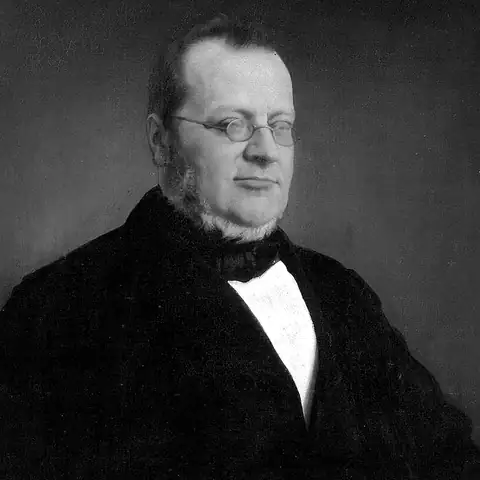
Who was Camillo Benso, Count of Cavour?
Camillo Benso, Count of Cavour, was born in 1810 and became a liberal admirer of British institutions. In 1845 he wrote an essay defending the repeal of the Corn Laws, and in 1847 he helped launch the newspaper Il Risorgimento. He became finance minister in 1851 and prime minister of Piedmont on 2 November 1852. He took Piedmont into the Crimean War, met Napoleon III at Plombières in July 1858 and, after returning to power on 20 January 1860, oversaw the annexations that made Italy. He died in Turin on 6 June 1861.
Political views
- He was a liberal who favored free trade and economic modernization, and wrote a major 1845 essay defending the repeal of the Corn Laws.Source: treccani.it
- As finance minister from 1851 he pushed a general tariff reform and a series of liberal trade treaties.Source: treccani.it
- He made railways, roads and shipping subsidies a priority; the source credits this with stimulating private investment, while noting criticism of the resulting debt.Source: treccani.it
- He backed the Siccardi laws, which began dismantling Church privileges, and a 1855 law suppressing certain religious orders, but opposed full state seizure of Church property.Source: treccani.it
- His final formula for church and state was a free Church in a free State.Source: treccani.it
- He brought Piedmont into the Anglo-French alliance in the Crimean War and raised the Italian question at the 1856 Paris Congress.Source: treccani.it
- At Plombières in July 1858 he discussed a joint war against Austria with Napoleon III; in 1860 he accepted the cession of Nice and Savoy to France and tolerated Garibaldi's expedition.Source: treccani.it
Legacy
Admirers credit Cavour with modernizing Piedmont and with the diplomacy that turned a regional kingdom into the nucleus of Italy. His tariff reforms and railways fed economic growth. Critics point to the debt his spending created and to the cession of Nice and Savoy to France as the price of French support. Republicans and radicals clashed with him, above all Garibaldi, and religious opponents disliked his curbs on Church privilege. His reported last words, that Italy was made, summed up an achievement carried out by a narrow liberal elite working from above rather than by mass participation.