12axes-testTake the test
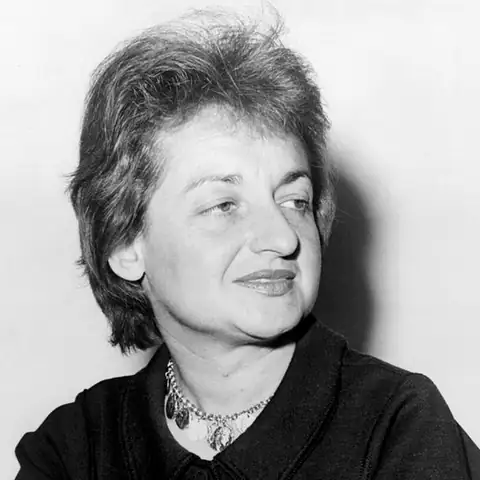
Betty Friedan
Historical figureUnited States1921-2006

Betty Friedan

Author of The Feminine Mystique · Co-founder and first president of the National Organization for Women

American writer whose 1963 book The Feminine Mystique helped launch second-wave feminism, who co-founded NOW and NARAL, and who later urged the movement to work with men.

Profile on 12 axes7 of 12 documented
ECONOMYSTATESOCIETYWORLDOwnershipMarketsWelfareAuthoritySecurityStructureMoralityReligionTechnologyCultureTradeForeign
Where they stood

Betty Friedan, axis by axis

  1. 01OwnershipNo clear record
    PublicPrivate
  2. PlannedFree
  3. SharedSelf-reliant
  4. DemocraticStrong leader
  5. LibertyOrder

    Her campaigns for legal rights and abortion repeal suggest a pro-liberty stance, but she wrote little on policing, so the score is modest.

  6. 06StructureNo clear record
    LocalCentral
  7. ProgressiveTraditional

    She backed abortion repeal and equal rights, but she also opposed treating lesbian sexuality as a political issue and later urged cooperation with men, so the score is not at the far end.

  8. 08ReligionNo clear record
    SecularReligious
  9. 09TechnologyNo clear record
    EmbraceCaution
  10. MulticulturalNational identity

    Critics said she focused on middle-class white women and neglected women of color and poor women. This is a thin basis for a score.

  11. 11TradeNo clear record
    GlobalProtected
  12. CooperationStrength

    She lobbied the United Nations to proclaim 1975 the International Year of Women. This is the only direct basis.

5 axes have no clear record, so matching leaves them out.

Who was Betty Friedan?

Friedan was born in Peoria, Illinois, in 1921. A survey of her Smith College classmates led to The Feminine Mystique, published in 1963, which argued that women were oppressed by a mystique of feminine fulfillment. In 1966 she co-founded the National Organization for Women and served as its first president until 1970. She co-founded NARAL in 1969 and the National Women's Political Caucus in 1971. Her later books included The Second Stage. She died on her 85th birthday in 2006.

Political views

  • She called the dissatisfaction many women felt the problem that has no name, and argued that women were oppressed by the mystique of feminine fulfillment.Source: encyclopedia.com
  • NOW's early priorities included enforcing the Title VII ban on sex discrimination and challenging gender-segregated help-wanted ads.Source: newworldencyclopedia.org
  • NOW also supported flight attendants who sued over being forced out of their jobs at 32 or upon marriage.Source: newworldencyclopedia.org
  • In 1969 she helped found what became NARAL, which aimed to decriminalize abortion, though she later said she was uneasy about the movement's narrow focus on abortion.Source: newworldencyclopedia.org
  • She was a prominent supporter of the Equal Rights Amendment.Source: encyclopedia.com
  • In the early 1970s she opposed feminist politics that treated lesbian sexuality as a political issue, endorsed separatism or condemned men as oppressors.Source: ebsco.com
  • In The Second Stage she argued that the movement should unite with men toward equality, and many feminists saw this as a betrayal.Source: ebsco.com
  • She lobbied the United Nations to proclaim 1975 the International Year of Women.Source: encyclopedia.com

Legacy

Admirers credit Friedan with naming a widespread frustration, mobilizing a mass movement and pushing for legal equality at work and in public life. Critics say her focus was on middle-class white women, leaving out women of color and poor women. Many feminists saw The Second Stage as a betrayal, while she argued that lesbian sexual politics divided the movement. Her temperament was also widely discussed, and her husband described her in harsh terms during their 1969 divorce, which involved allegations of abuse on both sides.

How close are you to Betty Friedan?

Take the 12 Axes test and see which historical figure is your political twin, axis by axis.

Take the test

Betty Friedan: questions

What did Betty Friedan believe?

She believed women should have equal rights and opportunities at work and in public life, supported abortion repeal and the ERA, and later urged women and men to work together.

What was The Feminine Mystique?

Her 1963 bestseller, which argued that women were oppressed by the mystique of feminine fulfillment. It sold more than three million copies and divided opinion.

Did Betty Friedan found NOW?

She co-founded the National Organization for Women in 1966 with 27 others and served as its first president until 1970.

Sources