Who is Rand Paul?
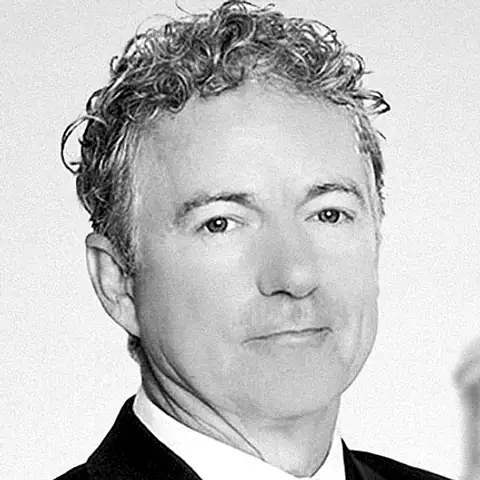
Pittsburgh-born Rand Paul is the son of Ron Paul, who served as a Texas congressman and ran for president as a Libertarian. Duke University was where he trained in medicine, and he practiced as an eye surgeon in Bowling Green. Tea Party support helped him win a Senate seat in 2010, and Kentucky has been his state in the Senate since 2011. In 2025 he took the chair of the Homeland Security and Governmental Affairs Committee. In 2016 he ran for the Republican presidential nomination. A self-described constitutional conservative, he often votes against his party on trade, war powers, surveillance and spending. In 2026 he said he had about an even chance of running for president in 2028, and that the midterms would come before his decision.
Previously: Chair of the Senate Homeland Security and Governmental Affairs Committee (since January 2025) · Candidate for the Republican presidential nomination (2015-2016) · Ophthalmologist in Bowling Green, Kentucky (from 1993)
Documented positions
- In July 2025 the One Big Beautiful Bill Act cleared the Senate 51-50, and three Republicans opposed it, him among them.Source: senate.gov
- He stood alone among Republicans in voting against the budget resolution the Senate took up in February 2025 to advance the party's agenda.Source: nbcnews.com
- Alongside Democrat Tim Kaine he co-sponsored a resolution to terminate the emergency underlying tariffs on Canada, and in April 2025 the Senate passed it 51-48.Source: reason.com
- A $40 billion Ukraine aid bill could not be fast-tracked in May 2022 because he blocked it, and he demanded a special inspector general to oversee the spending.Source: cnn.com
- He said in June 2025 that the United States should not be getting involved in the Israel-Iran conflict, as it was not America's job.Source: nbcnews.com
- In 2018 he urged Senate leaders to hold a vote on the criminal justice reform bill known as the First Step Act.Source: nbcnews.com
- The Federal Reserve Transparency Act, which he sponsored, would let the Federal Reserve be fully audited.Source: congress.gov
- A March 2026 resolution to halt the Iran war without congressional approval was co-sponsored by him; it failed 47-53, with his the only Republican vote in favour.Source: abc7news.com
Record
Paul's Senate record is built on opposition to deficit spending, to foreign aid, to surveillance programs and to debt ceiling increases lacking budget reforms, and on insistence that Congress authorize military action. On another Iran war powers resolution in June 2026 he voted present, saying peace talks should not be jeopardized. His 2013 filibuster, lasting 13 hours, was about drone strike policy, and later he brought a lawsuit over the bulk collection of phone records. Senate hearings during the COVID-19 pandemic saw him clash with Anthony Fauci over federal research funding and where the virus came from.
Supporters cite how steady he is on war powers, spending and civil liberties and how ready he is to vote against both parties. Critics cite his opposition to Ukraine aid, his votes against bipartisan spending deals, and his December 2020 assertion that the election was in many ways stolen, which he later walked back.
In their words
“Despite arguments to the contrary, Americans know tariffs are a tax they are going to have to pay.”