12axes-testTake the test
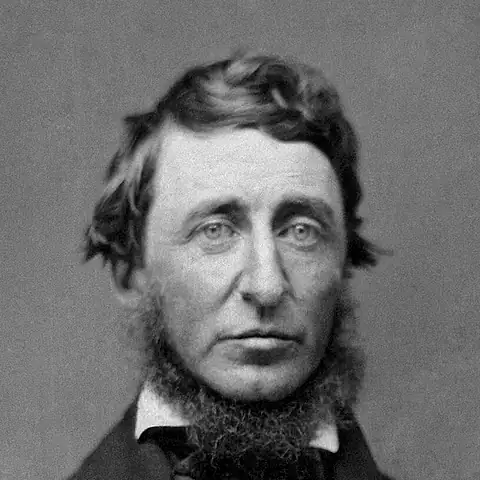
Henry David Thoreau
Historical figureUnited States1817-1862

Henry David Thoreau

Essayist and naturalist · Author of Walden and Civil Disobedience

New England essayist and naturalist who went to jail rather than pay a tax that supported slavery and war, and whose essay on civil disobedience inspired later nonviolent movements.

Profile on 12 axes9 of 12 documented
ECONOMYSTATESOCIETYWORLDOwnershipMarketsWelfareAuthoritySecurityStructureMoralityReligionTechnologyCultureTradeForeign
Where they stood

Henry David Thoreau, axis by axis

  1. 01OwnershipNo clear record
    PublicPrivate
  2. PlannedFree

    His feelings about capitalism were mixed. He admired how far trade reached but disliked the factory system and speculation, so he is scored near the centre.

  3. SharedSelf-reliant

    The score leans to self-reliance because of the plain, self-supporting life he described in Walden. It does not come from any welfare policy he stated.

  4. DemocraticStrong leader
  5. LibertyOrder
  6. LocalCentral

    He mistrusted the state and put individual conscience above it, though what he wanted was a better government rather than none.

  7. 07MoralityNo clear record
    ProgressiveTraditional

    He was a plain-living nonconformist who did not accept public opinion as proof of what is right. Neither a traditional nor a progressive label fits, so the axis is left null.

  8. SecularReligious

    He was a transcendentalist who found the sacred in nature. He would not pay a tax that supported a minister, and he disliked the state collecting money for the church.

  9. EmbraceCaution
  10. MulticulturalNational identity
  11. 11TradeNo clear record
    GlobalProtected
  12. CooperationStrength

3 axes have no clear record, so matching leaves them out.

Who was Henry David Thoreau?

Henry David Thoreau spent most of his life in and around Concord, Massachusetts, where he was born in 1817. He studied at Harvard, then joined the circle around Ralph Waldo Emerson. He built a small house at Walden Pond and lived there from 1845 to 1847, an experience that fed his book Walden (1854). A night in jail in 1846, after he would not pay a poll tax, led to the 1849 essay that people now call Civil Disobedience. He wrote against slavery's legal protections, including the Fugitive Slave Law, and spoke up for John Brown. Tuberculosis killed him in 1862.

Political views

  • He held that a person should obey conscience before an unjust law, and should break that law instead of waiting for a majority to change it.Source: plato.stanford.edu
  • For six years he would not pay his poll tax, objecting to slavery and to the war with Mexico. It got him one night behind bars.Source: en.wikipedia.org
  • He did not side with those who wanted no government at all. His call was for a better government, and for it right away.Source: gutenberg.org
  • He took part in the Underground Railroad, stood against the Fugitive Slave Law and said John Brown's actions were justified.Source: plato.stanford.edu
  • He attacked greed for goods, stock speculation and technology used with no real purpose, and asked people to live more simply.Source: plato.stanford.edu
  • He cared about animals and the natural world, and is often seen as an early voice for keeping wild land as public land.Source: en.wikipedia.org
  • He spoke against the mistreatment of Native Americans.Source: plato.stanford.edu

Legacy

Leo Tolstoy, Gandhi and Martin Luther King Jr. all learned from Civil Disobedience. His nature writing, meanwhile, is often said to have foreshadowed ecology and conservation. Libertarians, environmentalists and pacifists each count him as an ancestor. Critics say his trust in private conscience lets individuals set themselves above democratic law. Some also point out that his praise of John Brown does not fit a purely nonviolent reading. Others think his time at Walden was less self-reliant than the book makes it sound. Few readers noticed him while he lived, yet he became one of America's most read authors.

In their own words

“Under a government which imprisons any unjustly, the true place for a just man is also a prison.”
Resistance to Civil Government (Civil Disobedience), 1849
“I think that we should be men first, and subjects afterward.”
Resistance to Civil Government (Civil Disobedience), 1849

How close are you to Henry David Thoreau?

Take the 12 Axes test and see which historical figure is your political twin, axis by axis.

Take the test

Henry David Thoreau: questions

Was Henry David Thoreau an anarchist?

Anarchists like to claim him, but he stopped short of that. In his essay he wrote that he wanted a government that was better, not no government.

What did Thoreau believe about government?

He thought a person's conscience comes before the state. He said that if a law forces you to take part in injustice, you should refuse, even if the price is prison.

Why was Thoreau arrested?

In 1846 he refused to pay his poll tax as a protest over slavery and the war with Mexico. He spent a night in the cell. Someone else paid the tax and he was let out.

Sources