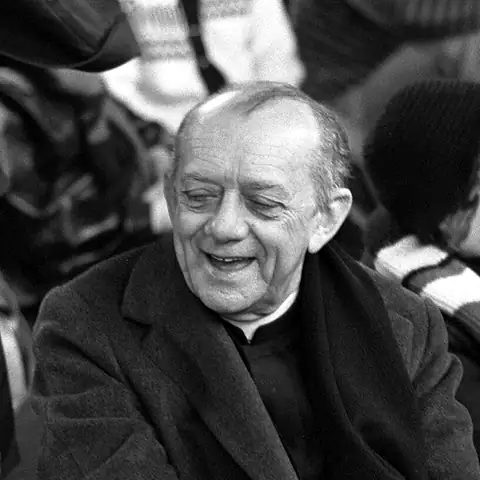
Who was Hélder Câmara?
Hélder Câmara was born in Fortaleza in 1909 and ordained a priest in 1931. He rose in the Brazilian church, led the national bishops' conference as its first secretary-general, and attended all four sessions of the Second Vatican Council. Pope Paul VI named him Archbishop of Olinda and Recife in 1964, the year the military took power. He held the post until 1985 and lived simply among the poor of the Northeast. The regime treated him as an enemy while he became a figure of moral authority abroad. He died in Recife in 1999.
Political views
- Led the founding of Caritas Brasileira on 12 November 1956, while serving as secretary-general of the bishops' conference.Source: cnbb.org.br
- Summed up his aim as a church that is poor and for the poor.Source: cnbb.org.br
- Founded the Cruzada Sao Sebastiao to house favela residents in Rio and the Banco da Providencia in 1959 to help people in precarious conditions.Source: infoescola.com
- Helped write the Pact of the Catacombs in 1965, a commitment by about forty clergy to a Church serving the poor, later tied to liberation theology.Source: infoescola.com
- Criticized the military regime for suppressing civil liberties and mistreating political prisoners, and defended democracy despite threats to his life.Source: americamagazine.org
- Called for a new economic order, promoted nonviolence and human rights, and wrote 22 books.Source: americamagazine.org
- Launched the campaign Year 2000 Without Misery in the 1990s and created a Justice and Peace Commission in Recife.Source: infoescola.com
Legacy
Admirers see a saintly figure who stood with the poor and spoke when others stayed quiet. The Vatican approved opening his cause for canonization in 2015. Critics, including the military government, branded him a communist, and the press was barred from printing his name. After he retired in 1985, his successor, appointed under John Paul II, reversed many of his reforms. His own line was that feeding the poor made people call him a saint, while asking why they were poor made them call him a communist.