12axes-testTake the test
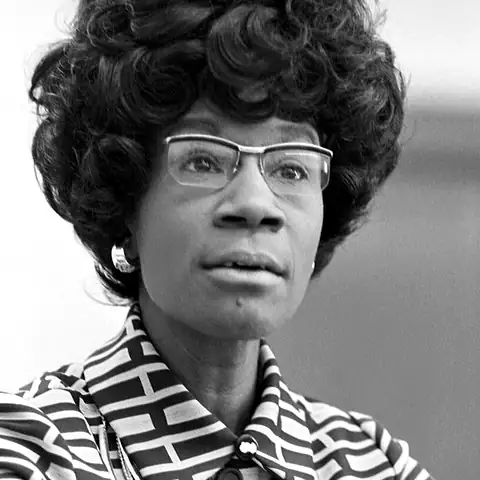
Shirley Chisholm
Historical figureUnited States1924-2005

Shirley Chisholm

U.S. Representative from New York (1969-1983) · First Black woman elected to Congress

Brooklyn congresswoman, the first Black woman in Congress, who fought for the poor, racial and gender equality and an end to the Vietnam War, and ran for president in 1972.

Profile on 12 axes6 of 12 documented
ECONOMYSTATESOCIETYWORLDOwnershipMarketsWelfareAuthoritySecurityStructureMoralityReligionTechnologyCultureTradeForeign
Where they stood

Shirley Chisholm, axis by axis

  1. 01OwnershipNo clear record
    PublicPrivate
  2. PlannedFree

    She expanded unemployment insurance to domestic workers and backed programs for the poor, which leans toward regulation.

  3. SharedSelf-reliant
  4. DemocraticStrong leader

    She ran as an outsider answering to voters, not party machines, under the slogan Unbought and Unbossed.

  5. 05SecurityNo clear record
    LibertyOrder
  6. 06StructureNo clear record
    LocalCentral
  7. ProgressiveTraditional

    She championed gender equality and job protection for pregnant teachers.

  8. 08ReligionNo clear record
    SecularReligious
  9. 09TechnologyNo clear record
    EmbraceCaution
  10. MulticulturalNational identity
  11. 11TradeNo clear record
    GlobalProtected
  12. CooperationStrength

    Opposition to the Vietnam War is the main basis.

6 axes have no clear record, so matching leaves them out.

Who was Shirley Chisholm?

Chisholm was born in Brooklyn in 1924 to immigrant parents from the Caribbean and spent part of her childhood in Barbados. She earned degrees at Brooklyn College and Columbia and worked in early childhood education before entering politics. She joined the New York State Assembly in 1965. In 1968 she was elected to Congress from Brooklyn's 12th District, becoming the first Black woman in the House, and she served seven terms, to 1983. In 1972 she sought the Democratic presidential nomination and won 152 delegate votes. She later taught at Mount Holyoke and died in Florida on January 1, 2005.

Political views

  • She ran for Congress on the slogan Unbought and Unbossed.Source: nps.gov
  • On the House Agriculture Committee she helped expand the food stamp program and create the WIC nutrition program for women, infants and children.Source: nps.gov
  • She opposed the Vietnam War and worked to end it.Source: amacad.org
  • In New York she created SEEK, a program providing scholarships to Black and Hispanic students at public universities.Source: womenshistory.org
  • In the state legislature she passed job protection for teachers on maternity leave and extended unemployment insurance to domestic workers.Source: womenshistory.org
  • In 1971 she co-founded the Congressional Black Caucus and the National Women's Political Caucus.Source: nps.gov
  • She described her 1972 run as an effort to open doors for later candidates and to push the Democratic agenda, not necessarily to win.Source: womenshistory.org

Legacy

Chisholm is remembered as a trailblazer. Admirers credit her with widening the field for Black and women candidates, with nutrition programs that still operate, and with her independence from party machines. She received the Presidential Medal of Freedom in 2015 and the Congressional Gold Medal in 2024, both after her death. Her presidential bid was underfunded and won about a tenth of the delegates. She was kept out of televised debates until she went to court, and the Congressional Black Caucus, then mostly men, was at times cool toward her campaign.

How close are you to Shirley Chisholm?

Take the 12 Axes test and see which historical figure is your political twin, axis by axis.

Take the test

Shirley Chisholm: questions

Why is Shirley Chisholm famous?

She was the first Black woman elected to Congress, in 1968, and the first Black candidate and first woman to seek a major party's presidential nomination, in 1972 for the Democrats.

What did Shirley Chisholm believe?

She championed racial and gender equality, help for the poor, expanded food and nutrition programs, and an end to the Vietnam War.

Did Shirley Chisholm win the Democratic nomination in 1972?

No. She won 152 first-ballot delegate votes and finished fourth. George McGovern won the nomination.

Sources