12axes-testTake the test
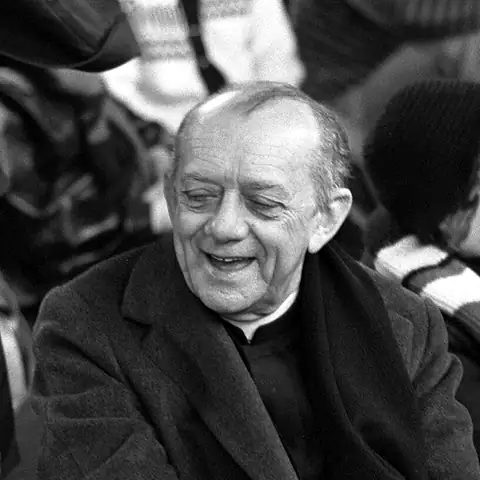
Hélder Câmara
Historical figureBrazil1909-1999

Hélder Câmara

Archbishop of Olinda and Recife (1964-1985) · First secretary-general of the Brazilian Bishops' Conference (CNBB)

Brazilian archbishop known as the bishop of the slums, who built housing and aid for the poor, helped shape the Church's turn toward them and denounced abuses under the military regime.

Profile on 12 axes6 of 12 documented
ECONOMYSTATESOCIETYWORLDOwnershipMarketsWelfareAuthoritySecurityStructureMoralityReligionTechnologyCultureTradeForeign
Where they stood

Hélder Câmara, axis by axis

  1. 01OwnershipNo clear record
    PublicPrivate
  2. PlannedFree

    He called for a new economic order and questioned why so many were poor.

  3. SharedSelf-reliant
  4. DemocraticStrong leader
  5. LibertyOrder
  6. 06StructureNo clear record
    LocalCentral
  7. 07MoralityNo clear record
    ProgressiveTraditional
  8. 08ReligionNo clear record
    SecularReligious
  9. 09TechnologyNo clear record
    EmbraceCaution
  10. 10CultureNo clear record
    MulticulturalNational identity
  11. GlobalProtected

    His call for a new international economic order points toward a fairer global system rather than protection.

  12. CooperationStrength

    He championed nonviolence and human rights and worked through bishops' councils across Latin America.

6 axes have no clear record, so matching leaves them out.

Who was Hélder Câmara?

Hélder Câmara was born in Fortaleza in 1909 and ordained a priest in 1931. He rose in the Brazilian church, led the national bishops' conference as its first secretary-general, and attended all four sessions of the Second Vatican Council. Pope Paul VI named him Archbishop of Olinda and Recife in 1964, the year the military took power. He held the post until 1985 and lived simply among the poor of the Northeast. The regime treated him as an enemy while he became a figure of moral authority abroad. He died in Recife in 1999.

Political views

  • Led the founding of Caritas Brasileira on 12 November 1956, while serving as secretary-general of the bishops' conference.Source: cnbb.org.br
  • Summed up his aim as a church that is poor and for the poor.Source: cnbb.org.br
  • Founded the Cruzada Sao Sebastiao to house favela residents in Rio and the Banco da Providencia in 1959 to help people in precarious conditions.Source: infoescola.com
  • Helped write the Pact of the Catacombs in 1965, a commitment by about forty clergy to a Church serving the poor, later tied to liberation theology.Source: infoescola.com
  • Criticized the military regime for suppressing civil liberties and mistreating political prisoners, and defended democracy despite threats to his life.Source: americamagazine.org
  • Called for a new economic order, promoted nonviolence and human rights, and wrote 22 books.Source: americamagazine.org
  • Launched the campaign Year 2000 Without Misery in the 1990s and created a Justice and Peace Commission in Recife.Source: infoescola.com

Legacy

Admirers see a saintly figure who stood with the poor and spoke when others stayed quiet. The Vatican approved opening his cause for canonization in 2015. Critics, including the military government, branded him a communist, and the press was barred from printing his name. After he retired in 1985, his successor, appointed under John Paul II, reversed many of his reforms. His own line was that feeding the poor made people call him a saint, while asking why they were poor made them call him a communist.

How close are you to Hélder Câmara?

Take the 12 Axes test and see which historical figure is your political twin, axis by axis.

Take the test

Hélder Câmara: questions

Was Dom Hélder Câmara a communist?

The Brazilian military government said so and kept the press from printing his name. His own stance rested on Christian charity, human rights and nonviolence, and he spoke out against abuses by the regime.

What was the Pact of the Catacombs?

A 1965 pledge, signed by about forty clergy during Vatican II, to live simply and serve the poor. Câmara helped write it, and it is often linked to liberation theology.

Is Hélder Câmara a saint?

Not yet. The Vatican approved opening his cause for canonization in 2015, which is an early step and not a declaration of sainthood.

Sources

Portrait: Helder Camara 1974.jpg by Hans Peters for Anefo, CC BY-SA 3.0 nl, via Wikimedia Commons. Cropped and converted to grayscale by 12axes-test.com.