12axes-testTake the test
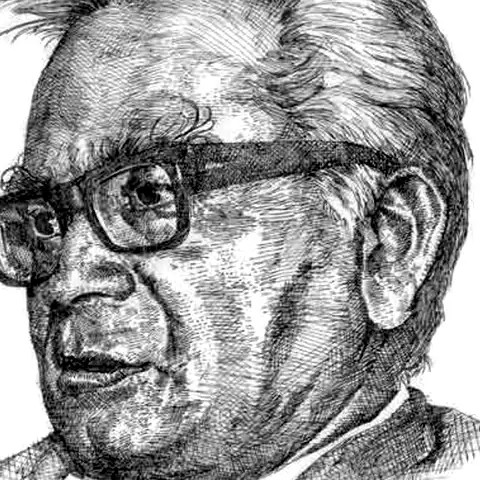
Ram Manohar Lohia
Historical figureIndia1910-1967

Ram Manohar Lohia

Socialist leader and Member of Parliament · Co-founder of the Congress Socialist Party (1934)

Indian socialist and freedom fighter who put caste and language at the center of the Left, urged preferential opportunity for backward groups and led the push against Congress dominance.

Profile on 12 axes10 of 12 documented
ECONOMYSTATESOCIETYWORLDOwnershipMarketsWelfareAuthoritySecurityStructureMoralityReligionTechnologyCultureTradeForeign
Where they stood

Ram Manohar Lohia, axis by axis

  1. PublicPrivate

    He backed social ownership of small machines and nationalizing foreign assets, but wanted a decentralized system, not a state monopoly.

  2. PlannedFree
  3. SharedSelf-reliant
  4. DemocraticStrong leader
  5. LibertyOrder
  6. LocalCentral

    His four-pillar state gave village, district, province and centre equal standing, and he warned against sovereignty residing only in the centre.

  7. ProgressiveTraditional
  8. 08ReligionNo clear record
    SecularReligious
  9. EmbraceCaution

    He opposed large-scale industrialization and favored small machines, which reads as caution about technology. It is not a rejection of machines.

  10. MulticulturalNational identity

    He pushed Hindi in place of English, which leans toward a shared national language, but he also fought caste and favored preferential opportunity.

  11. 11TradeNo clear record
    GlobalProtected
  12. CooperationStrength

2 axes have no clear record, so matching leaves them out.

Who was Ram Manohar Lohia?

Lohia was born in 1910 in Akbarpur, in present-day Uttar Pradesh. He studied in India and then in Berlin, where he read Marx and Hegel and turned toward socialism. In 1934 he helped found the Congress Socialist Party. He was jailed for anti-war speeches, took part in the 1942 Quit India Movement and helped run an underground Congress Radio. He left Congress with other socialists in 1948 and later chaired the Socialist Party and edited its journal Mankind. He won a Lok Sabha seat in a 1963 by-election and moved the first no-confidence motion against Nehru's government. He was re-elected in 1967 and died in New Delhi that October.

Political views

  • He treated caste, alongside class, as a core form of inequality and led a Jati Todo movement to banish caste.Source: m.thewire.in
  • He argued for preferential opportunity instead of equal opportunity, saying only that could pull down the walls of narrow coteries.Source: ebooks.inflibnet.ac.in
  • He proposed that 60 percent of political and economic space, including government vacancies, be set aside for a period for backward castes, Scheduled Castes and Tribes, minorities and women.Source: ebooks.inflibnet.ac.in
  • He rejected both Soviet-style communism and Western capitalism as centralized systems and wanted a decentralized socialism suited to Indian conditions.Source: ebooks.inflibnet.ac.in
  • He favored small machines under social ownership over large-scale industrialization, which he said would displace farmers and need capital India lacked.Source: ebooks.inflibnet.ac.in
  • He called for a four-pillar state in which village, district, province and centre each hold real power.Source: ebooks.inflibnet.ac.in
  • He urged replacing English with Indian languages, preferably Hindi, in his Angrezi Hatao campaign, calling English a language of privilege.Source: ebooks.inflibnet.ac.in
  • He supported a World Parliament and World Government and argued for nationalizing foreign assets.Source: m.thewire.in

Legacy

Admirers credit Lohia with bringing caste to the center of Indian socialism, and his demand for preferential opportunity shaped later Other Backward Classes politics. He is also seen as the architect of non-Congressism, which is credited with the non-Congress state governments of 1967. Supporters point to his courage: he was arrested as many as 25 times in India, Goa and Nepal and spared no minister, Nehru included. Opponents of his campaign to replace English with Hindi argued that it favored one language group. He died in 1967 without ever leading a government.

How close are you to Ram Manohar Lohia?

Take the 12 Axes test and see which historical figure is your political twin, axis by axis.

Take the test

Ram Manohar Lohia: questions

What did Ram Manohar Lohia believe about caste?

He saw caste as a core form of inequality alongside class and led a movement to banish it. He proposed preferential opportunity, including setting aside 60 percent of positions, for backward groups and women.

What was Angrezi Hatao?

Lohia's campaign to replace English with Indian languages, preferably Hindi, as the medium of instruction and public life. He saw English as a language of privilege.

Was Lohia a Marxist or a Gandhian?

Neither fully. He studied Marx and Hegel in Berlin and wrote Marx, Gandhi and Socialism, but he rejected Soviet-style centralization and argued for a decentralized socialism fitted to India.

Sources

Portrait: Lohia-full.jpg by Sreedharantp at Malayalam Wikipedia, CC BY-SA 3.0, via Wikimedia Commons. Cropped and converted to grayscale by 12axes-test.com.