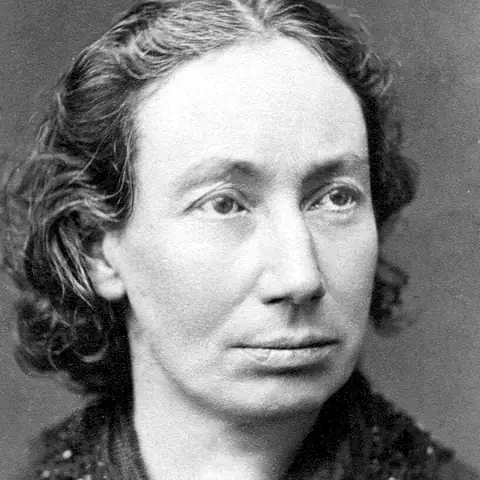
Who was Louise Michel?
Louise Michel was born in 1830 in Vroncourt-la-Côte, in Haute-Marne, and became a teacher. In 1852 her refusal to swear loyalty to Napoleon III cost her a job in the public schools. She moved to Paris in 1856 and joined revolutionary socialist circles around Louis-Auguste Blanqui. She fought in defense of the Paris Commune and was deported to New Caledonia. Amnestied in 1880, she became an anarchist agitator, was sentenced to six years in prison in 1883, later lived in London and returned to France in 1896. She died in Marseille in 1905.
Political views
- She refused to swear an oath of loyalty to Napoleon III in 1852, a decision that cost her a post in the public schools.Source: treccani.it
- In 1856 she moved to Paris and joined revolutionary socialist circles linked to Louis-Auguste Blanqui.Source: treccani.it
- She fought in defense of the Paris Commune and was deported to New Caledonia for it.Source: treccani.it
- After the amnesty of 1880 she carried out intensive revolutionary propaganda as an anarchist.Source: treccani.it
- In 1883 she was sentenced to six years in prison for leading a demonstration of unemployed workers in Paris.Source: treccani.it
- Later she lived in London, where she lectured, took part in debates and raised funds for French revolutionary movements, before returning to France in 1896.Source: treccani.it
Legacy
Admirers honor Michel as a steadfast teacher and revolutionary who accepted deportation and imprisonment rather than recant, and who kept organizing after the Commune was crushed. Critics at the time, and some historians since, saw a violent agitator who took up arms against the French state. The authorities treated her accordingly: she was deported in the aftermath of the Commune and jailed again in 1883 for leading a demonstration. Her reputation has since rested largely on her role in the Commune and her refusal to recant.