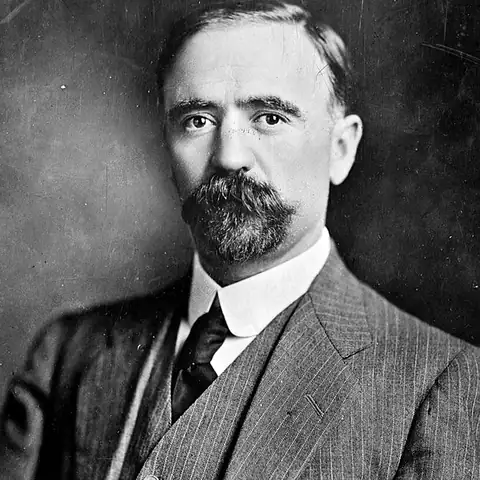
Who was Francisco I. Madero?
Francisco Madero was born in 1873 in Parras, Coahuila, into one of northern Mexico's richest families. He studied in France and the United States and entered politics in 1904. His 1908 book The Presidential Succession in 1910 attacked the long rule of Porfirio Díaz and called for free elections. He ran for president in 1910, was jailed, and fled to Texas, where he issued the Plan of San Luis Potosí calling for revolt on November 20. Díaz resigned in May 1911, and Madero won the October election. His presidency lasted about fifteen months. In February 1913 General Victoriano Huerta turned on him, and Madero was killed on February 22.
Political views
- His 1908 book criticized Díaz's long rule and called for free elections, freedom of expression and freedom of association.Source: tusbuenasnoticias.com
- His movement's motto was Sufragio Efectivo, No Reelección, meaning effective suffrage and no re-election.Source: elsiglodetorreon.com.mx
- The Plan of San Luis Potosí declared the 1910 elections void, said the ballot box was no longer a way to remove Díaz, and called for armed revolt with new elections promised afterward.Source: banxico.org.mx
- As an employer he paid good wages and funded basic schools, public dining halls and a hospital for his workers.Source: banxico.org.mx
- As president he upheld constitutional government and allowed a free press and wider political freedoms.Source: cognito.org
- He was reluctant to carry out major land or economic reforms, and Zapata answered with the Plan of Ayala in November 1911.Source: cognito.org
- He kept the federal army in place and gave it a leading role against rebels, and a sector of that army later turned on him.Source: banxico.org.mx
- He was interested in spiritism and in 1906 represented a psychological studies center at the First National Spiritist Congress.Source: elsiglodetorreon.com.mx
Legacy
Madero is remembered in Mexico as the apostle of democracy, and his government is recalled for its commitment to political freedoms. Admirers credit him with breaking the Porfirian dictatorship by appealing to the ballot box and with governing under a free press. Critics say he was too cautious. He did little on land, left Porfirian generals in command and lost allies such as Zapata and Orozco, while Porfirian elites, the Church and American business also opposed him. The coup of the Ten Tragic Days ended with Madero and Vice President Pino Suárez killed on Huerta's orders, and U.S. Ambassador Henry Lane Wilson quietly backed the plotters. His death opened a bloodier phase of the revolution.