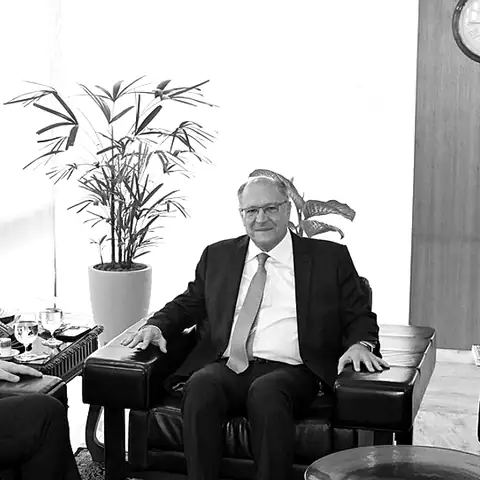
Who is Davi Alcolumbre?
Davi Alcolumbre was born in Macapá in 1977 and began as a city councillor in 2001. He became a federal deputy in 2002 and joined the party now known as União Brasil in 2005. Elected senator for Amapá in 2014 and re-elected in 2022, he first led the Senate from 2019 to 2021 and returned to the presidency on 1 February 2025 with 73 of 81 votes. His Senate term runs to 2031, so he was not on the ballot in 2026. Rayssa Furlan (Podemos) and Lucas Barreto (PSD) won Amapá's two open Senate seats and will join him in the state's delegation. His Senate presidency ends in February 2027, and he is widely reported to be seeking another term.
Previously: President of the Federal Senate (2019-2021) · Senator for Amapá (elected 2014, re-elected 2022) · Chair of the Senate Constitution and Justice Committee (CCJ) for four years to 2025 · Federal deputy (from 2003) · Macapá city councillor (from 2001)
Documented positions
- On 29 April 2026 the Senate rejected Lula's nominee Jorge Messias for the Supreme Court. Allies said Alcolumbre had released votes against it, which he denies.Source: folhape.com.br
- As President of Congress he promulgated the Dosimetria law, which reduces sentences for those convicted over the 8 January attacks and the coup plot, on 8 May 2026 after Lula let the deadline pass.Source: dgabc.com.br
- He withdrew the public security PEC from the Senate agenda on 15 October 2026, citing the need to avoid a hasty discussion and to settle amendments on lowering the age of criminal responsibility.Source: brasildefato.com.br
- After the Chamber approved the end of the 6x1 schedule, he sent an opposition PEC creating an hourly-pay work regime to the Constitution and Justice Committee on 28 May 2026.Source: cnnbrasil.com.br
- On 16 October 2026 he promulgated, with Lula and Hugo Motta, the amendment that ends the 6x1 schedule and cuts the week from 44 to 40 hours.Source: revistaoeste.com
- In July 2025, with Motta, he called for dialogue in the diplomatic and commercial fields over the 50 percent US tariff and cited the reciprocity law as a way to protect sovereignty.Source: istoe.com.br
- After months of rupture over the Messias vote, he held meetings with Lula in August 2026 in which Lula sought his help on the 6x1 amendment and the government's Senate agenda.Source: dgabc.com.br
Record
He is the central veto player in the Senate, and his record in 2026 mixes confrontation and deals with the government. The Messias rejection was described by Folha de Pernambuco as a historic defeat for Lula. A Senate request for an inquiry into Banco Master reached 42 signatures in January 2026, above the one-third required, and its creation depends on him reading it in plenary; as of that report he had kept silent. In August 2026 Lula and he resumed talks, and in October the Senate approved the 6x1 amendment 75 to 1.
Supporters see an arbiter who keeps institutions working and extracts concessions for the Senate. Lula and his allies blamed him for the Messias defeat, and government supporters have accused him of delaying priority bills.