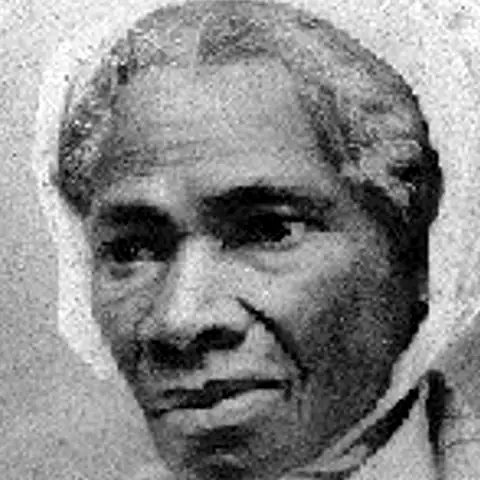
Who was Sojourner Truth?
Sojourner Truth was born into slavery around 1797 in New York and given the name Isabella. In 1827 she left her enslaver after he failed to free her as New York's anti-slavery law required, and she later said she walked away by daylight. After a religious conversion she became a traveling preacher and in 1843 took the name Sojourner Truth. Her Narrative was published in 1850. She joined the antislavery movement, then the women's rights movement, and spoke at the 1850 national convention in Worcester and the 1851 convention in Akron, Ohio. She kept speaking for the rights of African Americans and women through the Civil War. She died in Battle Creek, Michigan, in 1883.
Political views
- In 1827 she left after her enslaver failed to free her or to honor the New York Anti-Slavery Law of 1827.Source: nps.gov
- After a religious conversion she became an itinerant preacher, and in 1843 she took the name Sojourner Truth.Source: nps.gov
- She joined the antislavery movement in the 1840s and the women's rights movement by the 1850s.Source: nps.gov
- At the 1850 national women's rights convention in Worcester, an agenda item demanded the vote for women and addressed the wrongs of enslaved women.Source: encyclopedia.com
- She argued that Christ was born of a woman and that women could set right the world that Eve had upset.Source: encyclopedia.com
- The earliest published report of her 1851 Akron speech, printed within a month, has no 'Ain't I a Woman' refrain. That phrase comes from Frances Gage's version, published in 1863.Source: nps.gov
Legacy
Admirers see Truth as one of the great American voices against slavery and for women's equality, a woman who could neither read nor write yet became a popular revival preacher. Her story shows the overlap of abolition and women's rights. Historians point out a problem with the record. The famous Akron refrain comes from Frances Gage's version published twelve years later, while the earliest report does not render her speech in dialect. Scholars cannot confirm that she used the phrase. What her words actually were is therefore less certain than the legend suggests, although her standing as an activist is secure.