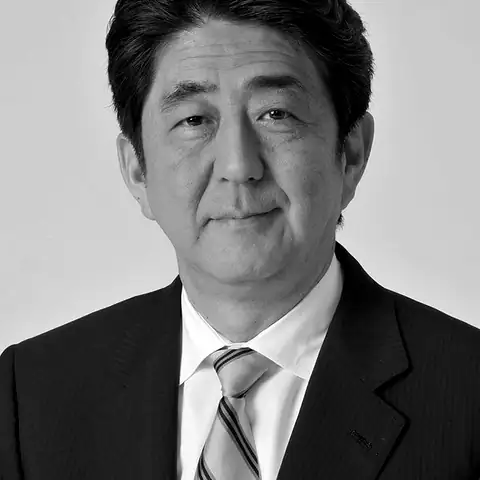
Who was Shinzo Abe?
Politics ran in Shinzo Abe's family: his mother's father, Nobusuke Kishi, had been prime minister. He joined the lower house of the Diet in 1993 and later served as Chief Cabinet Secretary under Junichiro Koizumi. In 2006 he became the first prime minister born after the war, but he quit within a year after scandals, election defeats and illness. A landslide in December 2012 returned him to power. He won again in 2013, 2014 and 2017, and no one before him had held the job so long. Poor health forced him out in September 2020. In July 2022 a gunman who resented his links to the Unification Church killed him as he campaigned in Nara.
Political views
- Abenomics was his flagship plan. It mixed easy money aimed at 2 percent inflation, flexible government spending and structural reform.Source: en.wikipedia.org
- He promised a society where 'all women can shine' and set a goal of women holding 30 percent of leadership posts by 2020.Source: en.wikipedia.org
- Laws passed in 2015 let Japan's Self-Defense Forces help allies that come under attack, and they went through despite large street protests.Source: theguardian.com
- He wanted to change Article 9, the constitutional clause that gives up war, but he never got a revision to a vote.Source: theguardian.com
- When the United States pulled out of the Trans-Pacific Partnership, he kept the deal going, and it became the CPTPP in 2018.Source: en.wikipedia.org
- A state secrets law in 2013 widened what could be classified and stiffened punishments for leaking.Source: en.wikipedia.org
- In his 2015 statement for the war's anniversary he said future generations should not be 'predestined to apologize', while repeating Japan's earlier apologies.Source: japan.kantei.go.jp
Legacy
Supporters say Abe ended years of short-lived prime ministers, lifted the stock market and company profits, deepened the US alliance, started the Quad dialogue and pushed for regional trade. Critics reply that Abenomics never hit its inflation goal, that public debt rose to almost 240 percent of GDP and that household incomes stood still. His remarks on wartime history angered China and South Korea. In 2007 he said there was no evidence that the military forced women into sexual slavery, and in 2013 he visited the Yasukuni Shrine. Still, he agreed a 2015 settlement with Seoul over comfort women. Scandals over favoritism, called Moritomo and Kake, and finance ministry papers that had been altered, hung over his second term.
In their own words
“Japan has repeatedly expressed the feelings of deep remorse and heartfelt apology for its actions during the war.”