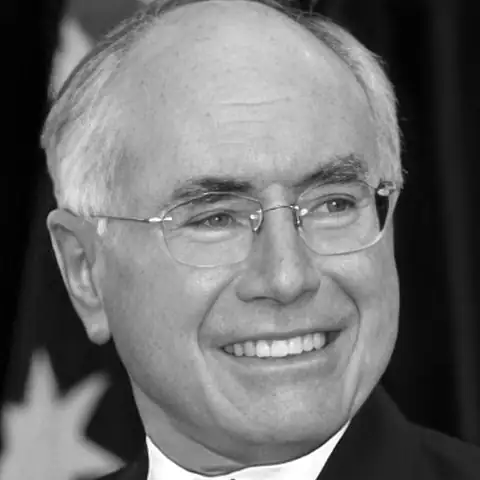
Who is John Howard?
Sydney-born in 1939, Howard practised commercial law before entering parliament for Bennelong in 1974. Malcolm Fraser made him treasurer. As Liberal leader in the 1980s he lost the 1987 contest. He took the leadership again in 1995 and won big in 1996. He won four elections in all, and only Robert Menzies stayed prime minister longer. In 2007 the Liberals lost office and Howard lost his own seat. He has stayed active in public debate since.
Political views
- Made workplace relations reform the core of his 1996 platform and opposed compulsory union membership.Source: moadoph.gov.au
- Described secure, united families as the best welfare system a country could have.Source: moadoph.gov.au
- Paid for a Natural Heritage Trust partly by selling off one third of the government-owned Telstra.Source: moadoph.gov.au
- Introduced national firearms controls after Port Arthur, a massacre that took 35 lives.Source: en.wikipedia.org
- After the Tampa affair he stood by border protection and said Australia alone would choose who entered.Source: moadoph.gov.au
- Treated the fight against terrorism as Australia's cause as much as America's, and later committed troops to Iraq.Source: moadoph.gov.au
- Said a greenhouse deal could not succeed unless the United States and developing nations were included.Source: moadoph.gov.au
- Kept the constitutional monarchy and declined to offer Indigenous Australians a formal apology from Parliament.Source: en.wikipedia.org
Legacy
Supporters give Howard credit for years of steady growth, lower public debt, the GST, the post-Port Arthur gun buyback and the Australian-led force that helped East Timor reach independence. He won over many working and middle-class voters, whom he called battlers, and rankings often place him in the top group of Australian prime ministers. Critics fault his decision to join the 2003 Iraq invasion, the offshore detention of asylum seekers under the Pacific Solution, and the GST he had earlier ruled out. They also point to WorkChoices, which hurt him in 2007. His refusal to apologise to the Stolen Generations drew criticism, as did his early silence on Pauline Hanson's views.
In their own words
“But we will decide who comes to this country and the circumstances in which they come.”